Condor Sentry Plate Carrier Tan Review

Condor Sentry Plate Carrier Tan Review

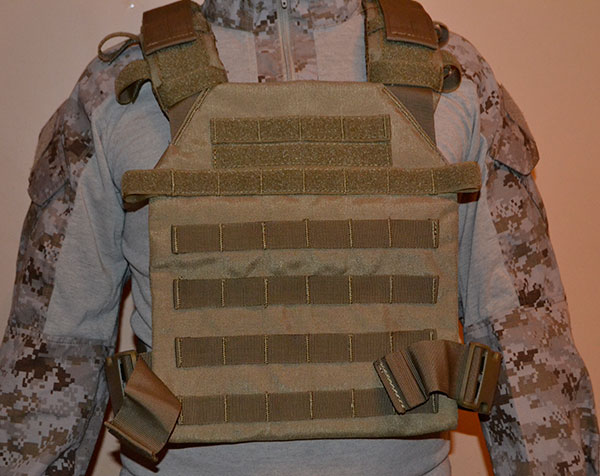
Condor Sentry Plate Carrier – Tan

Inexpensive and simple plate carrier. Holds M or L ESAPI Plates (Up to 10″ x 13″ Plates).

You can attach different pouches to MOLLE webbing.

Has emergency drag handle on the back.

Additional features:
– Quick Adjust Shoulder Straps
– Hook and Loop Adjusted Guides
– Padded Mesh Interior Lining
– Hook and Loop Webbing Panels
– Quick Adjust Cinchs
– Quick Release Buckles
– Easy Access Plate Pockets

Size Waist Size: 30″ – 46″ Adjustable

Condor Sentry Plate Carrier Tan Review

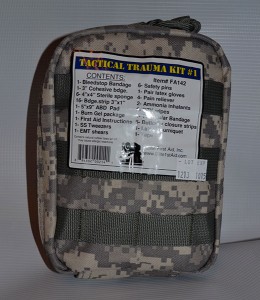
Elite First Aid Tactical Trauma Kit #1 Review

Elite First Aid Tactical Trauma Kit #1 Review

Elite First Aid Tactical Trauma Kit #1 Review

Tactical Trauma Kit
Tactical Trauma Kit

Good First Aid Tactical Kit is very important for any prepper. You can create one yourself or get stocked one.

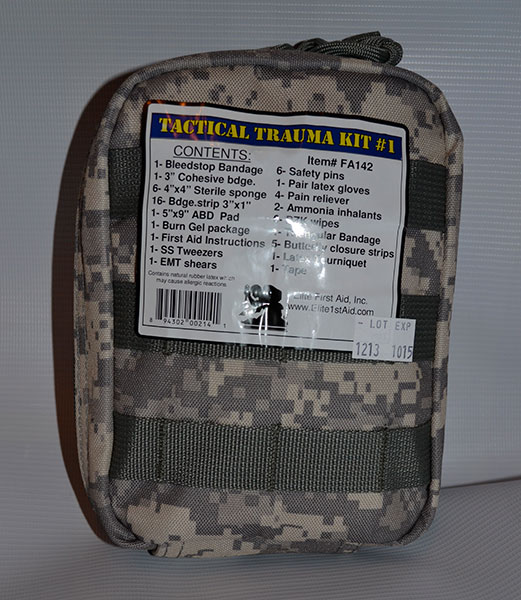
Tactical Trauma Kit #1 by Elite First Aid comes in a very good pouch (you can choose color) and contains a lot of things. But I would really recommend replacing some of them.

There are following items in Elite First Aid Elite First Aid Tactical Trauma Kit #1

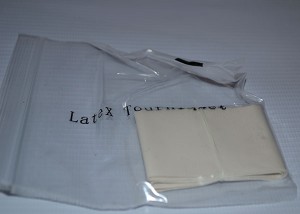
Latex Tourniquet

Should be replaced with Combat Application Tourniquet immediately!

Latex Tourniquet
Latex Tourniquet

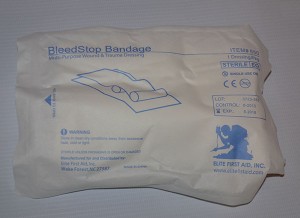
Bleedstop Bandage

Good but you should replaced it with Olaes or Israel bandage. They work much better.

Bleedstop Bandage
Bleedstop Bandage

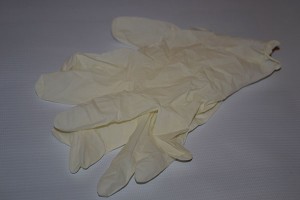
Latex Examination Gloves (pair)

Good but should be replaced with Nitril gloves which are more durable. Also some people suffer from latex allergies

Latex Examination Gloves (pair)

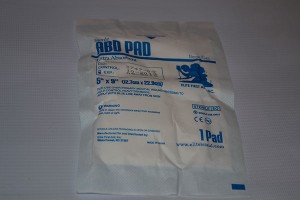
ABD Pad

Good but too small for big ABD wounds.

ABD Pad
ABD Pad

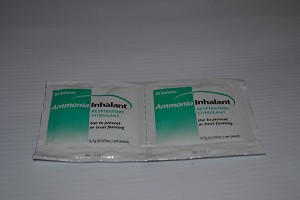
Ammonia Inhalant

Ammonia Inhalant
Ammonia Inhalant

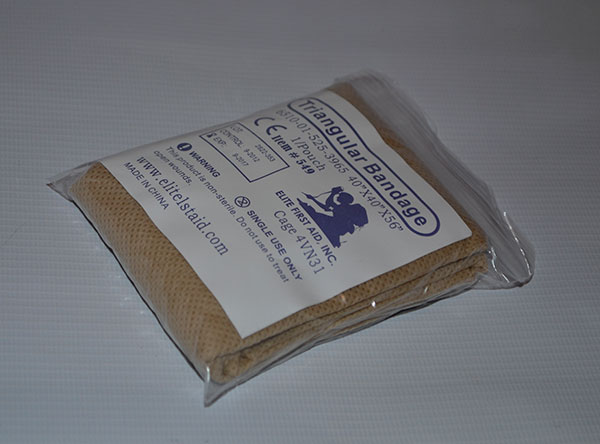
Triangular Bandage

Triangular Bandage
Triangular Bandage

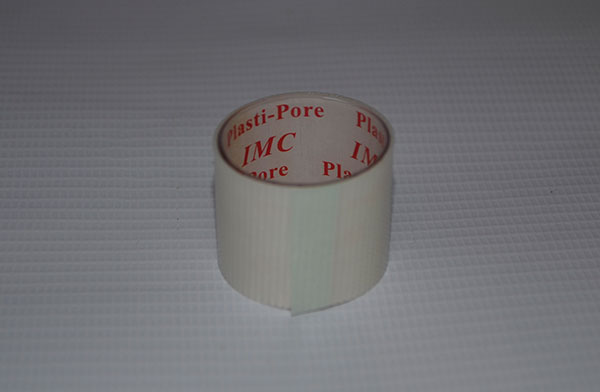
Tape

Tape
Tape

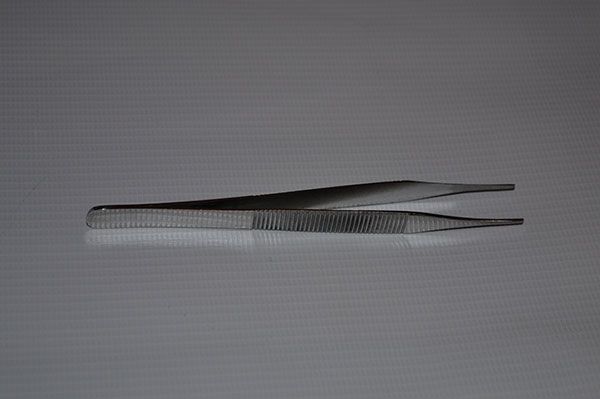
Tweezers

Tweezers
Tweezers

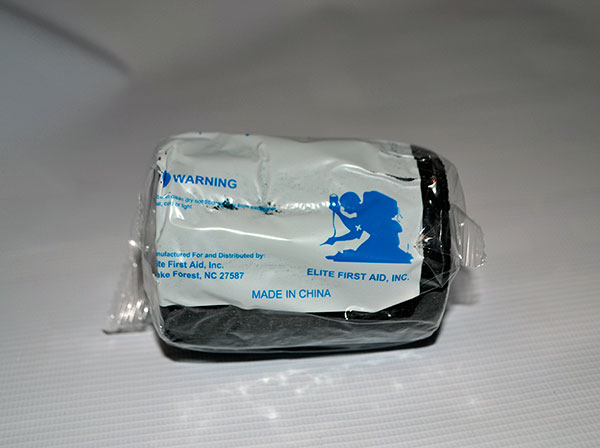
Self Adherent Wrap

Self Adherent Wrap
Self Adherent Wrap

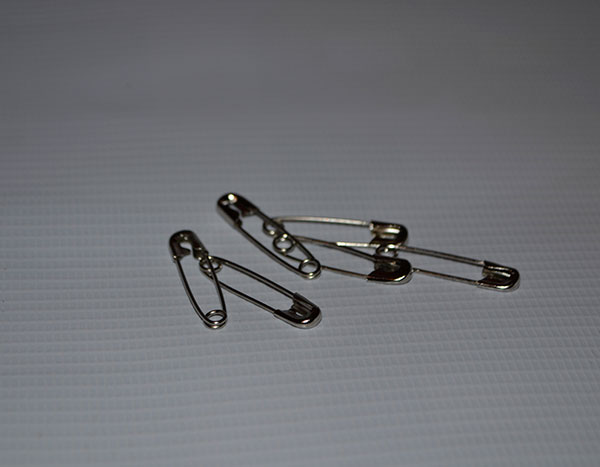
Safety Pins

Safety Pins
Safety Pins

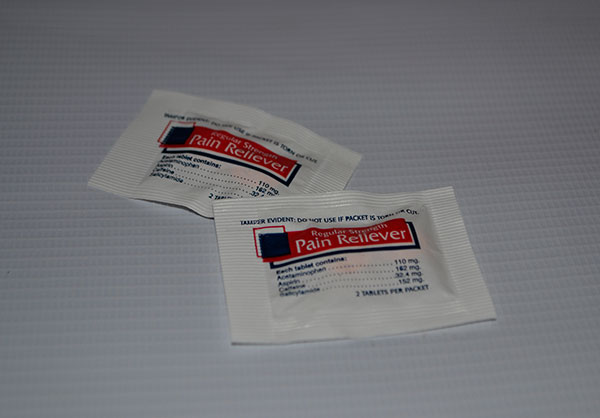
Pain Reliever Pills

Pain Reliever Pills
Pain Reliever Pills

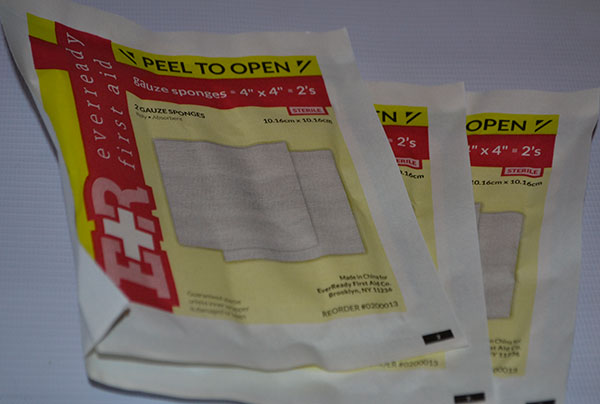
Gauze Sponges

Gauze Sponges
Gauze Sponges

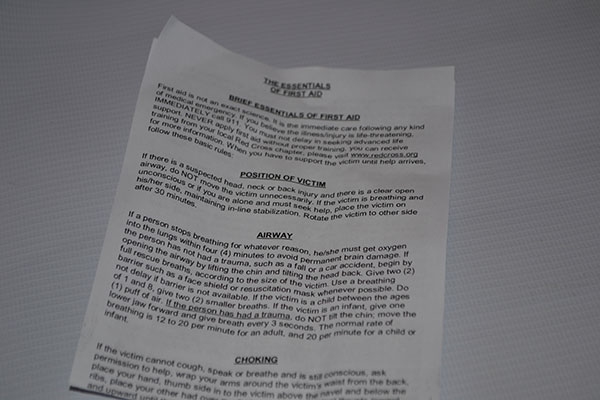
First Aid Instructions

First Aid Instructions

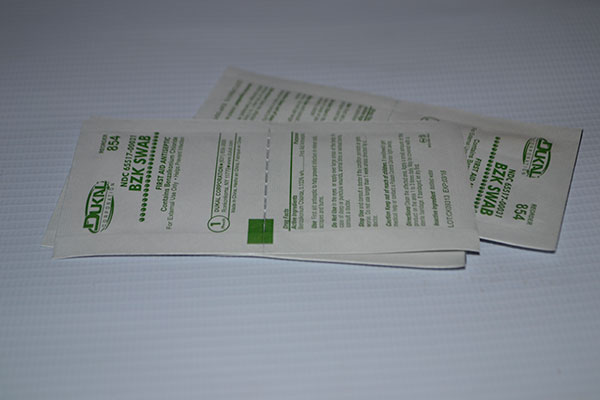
Antiseptic

Antiseptic
Antiseptic

EMT Shears

EMT Shears
EMT Shears

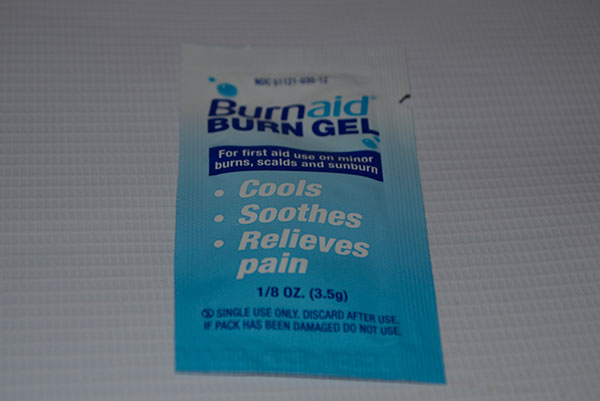
Burnaid Burn Gel

Burnaid Burn Gel
Burnaid Burn Gel

Bandage

Bandage
Bandage

Bandage

Bandage
Bandage

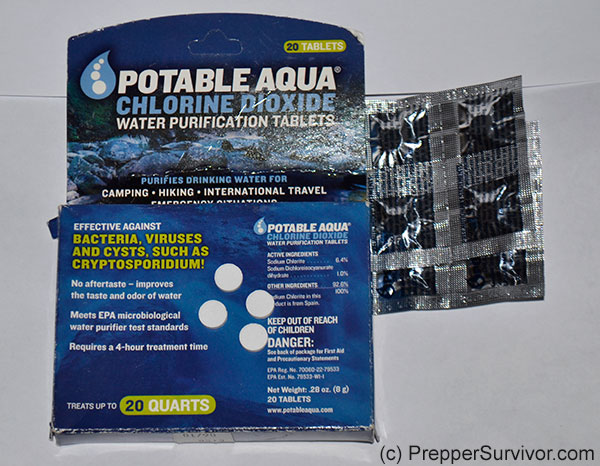
Portable Aqua Chloride Dioxide Water Purification Tablets

Portable Aqua Chloride Dioxide Water Purification Tablets

Portable Aqua Chloride Dioxide Water Purification Tablets

Water purification tablets are essential to have in emergency situations where your access to clean water is limited. Perhaps you are going hiking in the woods or someplace without public water that is filtered. This means the only water supply you will have at your disposal is the water found in the outdoors, like in lakes and rivers. Since this water is unregulated and exposed to all of the germs and pathogens of the open air, it will likely make you sick if you drink it. But if you continuously drink this diseased water then you will turn ill and eventually die. The only chance you’ll have in preventing yourself from getting sick by this water is to purify it with water purification tablets. These tablets will kill all of the active pathogens contained in the water, making it safe for you to drink.

The active ingredient found in water purification tablets is usually chemicals like iodine, chlorine dioxide or chlorine. Any one of these chemicals has the ability to destroy viruses and bacteria that may exist in the water. But you don’t have to worry about the science part of these tablets. You can just go to your local drug store and choose from a variety of over-the-counter water purification tablet brands that are available at cheap prices. Then you can pack them in a backpack or purse and take them out whenever you are ready to use them. But before you use them though, you need to have a container filled with water that you want to purify. This could be a mug, canteen, thermos or any other drinking container that you can close with a lid or cap. All you do is fill the container up with water, put one or more purification tablets in the water and then close the container. Wait at least 30 minutes for the tablets to completely dissolve. If they are not dissolved then just wait longer until they are dissolved.

You may notice a strange taste to the water after it is purified. This is unfortunately a taste created from the chemicals in the tablets, but there is a way to neutralize these flavors. If you use iodine-based tablets then iodine neutralizer tablets can get rid of the unpleasant taste in the water after it is purified. If you use chlorine-based tablets then just take the lid off the container and let the chlorine evaporate from the water, leaving it with a normal water taste afterwards.

Portable Aqua Chloride Dioxide Water Purification Tablets – one of the easiest ways to purify water when needed:

portable_aqua_chloride_dioxide_water_purification_tablets

Fire Starter for Survival

Fire Starter for Survival

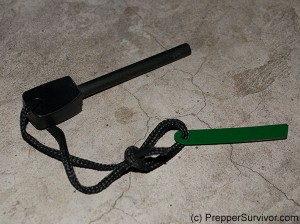
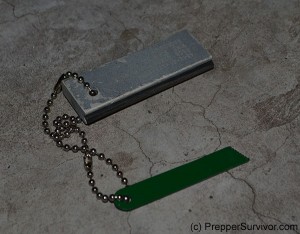
There are two most popular products for emergency or camping: Magnesium Fire Starter and Firesteel fire starter:

Firesteel Fire Starter
Magnesium Fire Starter

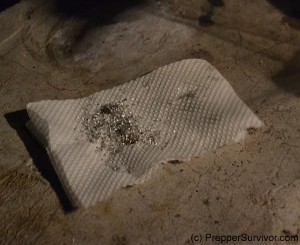
When using magnesium fire starter, shave magnesium from your fire starter onto the paper napkin.

Magnesium shavings
Magnesium shavings

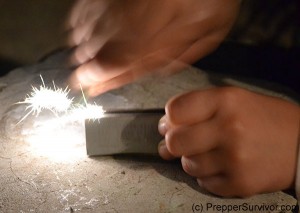
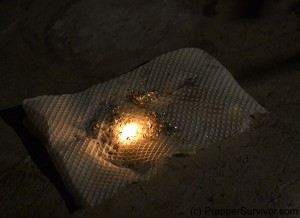
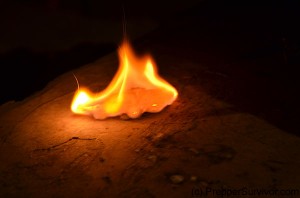
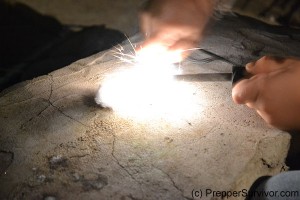
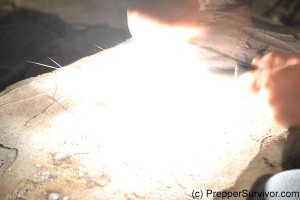
Ignite the fire using the flint portion of your magnesium fire starter:

Ignite Fire with Firestarter

Paper napkin and magnesium fire starter

You don’t need magnesium shavings when using piece of cottonwool:

Piece of cottonwool
Piece of cottonwool

Firesteel fire starter gives you more sparkles:

Firesteel fire starter

You can get firestarter on Cabela’s: http://tinyurl.com/qc3vrad

Best Emergency Water Sources for Survival

Best Emergency Water Sources for Survival

Best Emergency Water Sources for Survival

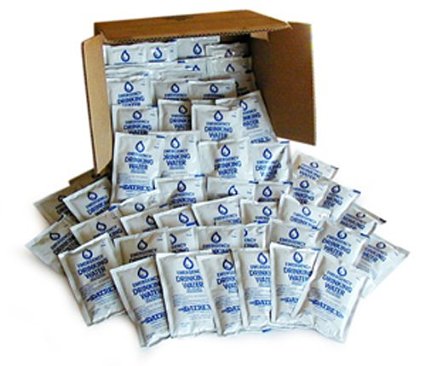
Datrex Emergency Survival Water Pouch

Datrex Emergency Survival Water Pouch

Emergency purified water for immediate use; lightweight and extremely compact(64)-125 ml sachets
Loss potential minimized due to individual sachets and ideal for storage
Easy to dispense from a premeasured sachet; superior packaging materials for optimum durability in your survival kit
USCG, Canadian Coast Guard, EC and NZ approval (NSN 8960 0112 4454 3)
5 years shelf life

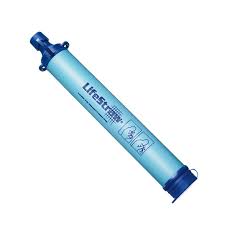
Lifestraw

Lifestraw
Lifestraw

Award-winning LifeStraw has been used by millions around the globe since 2005
Removes minimum 99.9999% of waterborne bacteria (>LOG 6 reduction) and surpasses EPA standards for water filters
Removes minimum 99.9% of waterborne protozoan parasites (>LOG 3 reduction) and filters to an amazing 0.2 microns
Filters up to 1000 liters of contaminated water WITHOUT iodine, chlorine, or other chemicals
Comes in a sealed bag, perfect for storing for emergencies

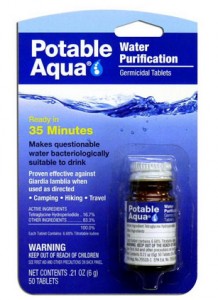
Potable Aqua Water Treatment Tablets

Potable Aqua Water Treatment Tablets

Potable Aqua Water Purification Iodine Tablets (50 Tablets)
Iodine tablets designed to make contaminated water suitable for drinking
Tablets prove effective against Giardia lamblia when used as directed
Intended for short-term or limited emergency use only
Water is ready within 30 minutes; neutralizes iodine aftertaste and color
Ideal for campers, travelers, hikers, militaries, and emergency organizations

Survival Fishing

Survival Fishing

Survival Fishing

Survival Fishing
Survival Fishing

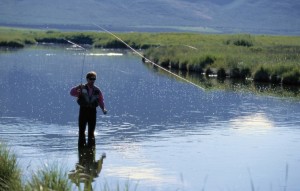
In a survival situation, one of quickest ways to obtain food is by fishing and all fresh water fish are edible. You can find fish in ponds, lakes, streams and rivers. While many sport anglers will have boats and plenty of gear to catch fish you in a survival situation will not have any of this gear. However, in a survival situation you do not require boats and expensive rods and reels to catch fish. You may find yourself lost or stranded without any traditional fishing gear or none at all. This does not mean you have to go hungry however, you can find what you need in your environment.

Fishing Spears

Fishing spear made from a small green sapling. Simply split the ends to form prongs and use pieces wood in between the prongs to hold them apart. A single sharpened end is not ideal for catching fish because it may not penetrate to hold the fish and can damage edible parts of the fish. Tools needed to make this spear are a sharp edged rock or knife and a piece of wood to strike the rock or knife to split the ends.

Hooks

You can fish using the traditional line and baited hook. Hooks can be made from pieces of wire, bone, plastic and wood. If you have, a paper clip or a pop top from a soda can then you have a fishhook. If you do not have a multi-tool to bend and sharpen the metal or pop top you will have to use rocks and whatever else is available to form the hooks.

The hook can be made from a piece of bone or metal about one inch long. Both ends are sharpened and baited in hopes the fish swallows the entire hook. Tools need are a knife/multi-tool or sharp thin pieces of rock. Use a heavier rock to form the pop tops unless you can use the wire cutters from a multi-tool. Simply batter the tops into a shape hook and then sharpen using a coarse stone.

A broken button can be turned into a gorge hook. Attach to fishing line using the hole available on the button. Sharpen the ends that will hold the bait by rubbing against a coarse rock or use the file blade from your multi-tool.

Fishing Line

Paracord is a survival must have because you can unravel the seven inner strands of paracord for fishing line and it would be heavy enough for your needs. You can also make line by twisting strips of bark together. Do not ring any trees that you are removing bark from because it will kill the tree. Remove the outer bark in a long strip down one side and peel away the inner strands. Once you have three or four simply braid them together into line. Any fibrous plant can be used for string by separating the stands and then twisting or braiding together. You can use your shoelaces, and even small gauge wiring from an automobile for fishing line. You can even unravel clothing to make line.

Bait and Tackle

Bait can be grubs, worms, fuzzy seedpods and even scraps of cloth. Use pieces of Styrofoam or plastic bottle caps for bobbers, and small pebbles for sinkers. Use pop tops with cloth tied to them for lures and any piece of shiny metal for spoons.

Best Tents for Survival

Best Tents for Survival

Best Tents for Survival

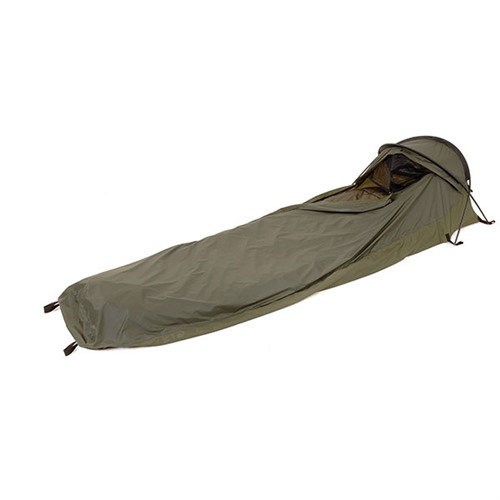
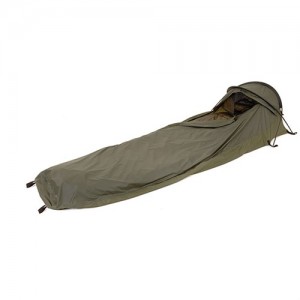
Snugpak Stratosphere 1-Person Tent

Snugpak Stratosphere 1-Person Tent is the best and the lightest one-person tent you can find!

Snugpak Stratosphere 1-Person Tent

MUCH SMALLER than a standard tent but with all the features, supplied with seven ultralight alloy Y type stakes/pegs and packs into its own compression sack.

Ultra compact 1 person shelter
Fabric – Top; 50D Nylon Ripstop with 5000mm waterproof polyurethane coating
Fabric – Bottom; 210T Nylon with 8000mm waterproof polyurethane coating
Zip; Full Length side Zip
All seams are taped sealed
Stands up to severe weather
Makes sure you stay dry
Poles; Aluminum with Screw Lock Tips
Small pack size: Dimensions: 90” x 37” x 42”
Weight: 39oz (Including Poles, Pegs and Compression Sack)

Recommended Product:
Snugpak Stratosphere 1-Person Tent

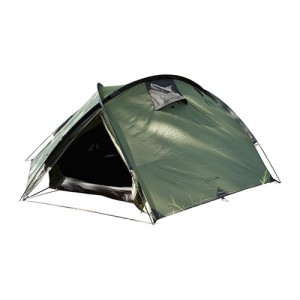
Snugpak Bunker 3-Person Tent

Snugpak Bunker 3-Person Tent

The Bunker™ by Snugpak® is built and designed for long term hard use. With it’s 5000mm PU Coated Fly it can handle large amounts of rain as well as surpasses many other tent manufacturers with a much less superior fabric. The Bunker™ has two doors and two vents as well as all types of extras like internal mesh pockets, No-See-Um-Mesh, all seams are seam taped and much more. The Bunker™ is a Fly First pitch type tent, which allows the users to quickly set up the fly and seek shelter from the elements.

Recommended Product:
Snugpak Bunker 3-Person Tent

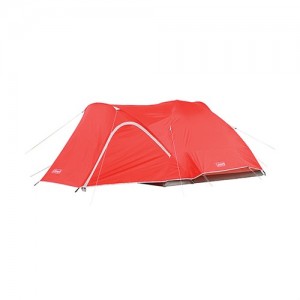
Coleman Hooligan 4 Tent – Shelter for the Group

Coleman Hooligan 4 Tent

4 person Coleman Hooligan tent. Your entire hiking group will sleep protected from the weather inside a Coleman® Hooligan™ 4 Tent with full rainfly. The lightweight, two-pole design is easy to carry and easy to set up. The three-season tent is designed for most conditions—mild to harsh—backpackers are sure to encounter. A fully-covered vestibule helps keep the inside of the tent clean by allowing for dry entry and blocking the wind around the door. When the weather is warm, take the rainfly off to enjoy the incredible ventilation from the mesh inner tent. Insta-Clip™ Pole Attachments stand up to high wind and the WeatherTec™ System’s patented welded floors and inverted protected seams help ensure you stay dry. The snag-free, continuous pole sleeves mean you only have to feed the poles once—reducing setup time to just 10 minutes. The 9 ft. x 7 ft. (2.74 m x 2.13 m) floor is large enough to fit four people.

Recommended Product:
Coleman Hooligan 4 Tent

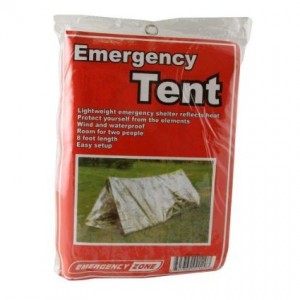
Emergency Shelter Tent

Emergency Shelter Tent

This emergency tent is only for use when you have no choice. Put it in your car, in a pocket of your ski jacket, in backpack, everywhere. This tent is cheap and compact but can save life.

The Emergency Tent is a lightweight and compact emergency shelter. It is wind and waterproof and easy to set up. It is 8 feet long and roomy enough for two people.

3 Best Bug Out Bags (Updated 2026)

3 Best Bug Out Bags (Updated 2026)

3 Best Bug Out Bags

If you want a Bug Out Bag that actually helps you in a real “grab-and-go” moment, you need more than cool-looking gear and a tactical vibe. You need a bag that fits your body, matches your local climate, and carries the essentials without turning you into a slow, sweaty pack mule after 20 minutes.

In this post, I’ll show you the 7 best bug out bags worth considering right now, with clear reasons for each pick. Some are perfect for ultralight mobility, others shine for family-ready capacity, and a couple are built for hard use and bad weather. I’ll also point out what most beginners get wrong, so you don’t waste money on the wrong size, the wrong features, or a bag that falls apart when you need it most.

Quick note: the “best” bag depends on your plan. Are you leaving on foot or by car? Urban or rural? One day or three? I’ll keep the picks practical and explain who each bag is best for—so you can choose fast and feel confident.

TacPreps 72-Hour Survival Kit
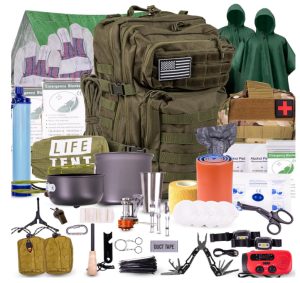

TacPreps 72-Hour Survival Kit | Emergency Bug Out Bag with First Aid, Water Filter, Food, Tools | 45L Tactical Backpack for Camping, Hiking, Outdoor

Here’s my take on the TacPreps 72-Hour Survival Kit / Emergency Bug Out Bag (45L), “2 Persons, Deluxe without Food” based on the listing specs and the included item breakdown. I have not field-tested this exact kit, so I’m reviewing it like a gear-check audit: what’s smart, what’s missing, and what I’d upgrade before trusting it.

The good (what they did right)

The “big rocks” are covered.
A beginner kit should handle the basics first: water, shelter, heat, light, and first aid. This one clearly aims at that. The listing highlights a water filter, an IFAK-style first aid kit, and a 45L pack with compartments.

Shelter package looks more complete than most pre-packed kits.
The comparison table shows an emergency tent, bivvy bags, paracord, emergency blankets, and ponchos included for the 2-person kits, which is a solid baseline for short-term exposure risk.

First aid is not just band-aids.
The IFAK list includes alcohol pads, sterile pads, a trauma bandage, elastic bandage, a splint, scissors, an emergency blanket, and a CPR barrier device. That’s more thoughtful than many “survival kit” bundles that inflate piece count with junk.

The tool selection focuses on utility, not gimmicks.
The listing calls out practical stuff like a headlamp, saw, compass with whistle, multitool, duct tape, gloves, and zip ties, plus a solar radio/light combo. Those are realistic problem-solvers for outages and messy evacuations.

The bad (what would make me hesitate)

Weight and bulk can kill the whole idea of a bug-out bag.
The package weight is listed as 18 pounds. That’s before you add your personal items (water containers, extra layers, meds, documents, etc.). For many beginners, heavy bags end up living in a closet instead of being truly grab-and-go.

“171 pieces” is not the same as capability.
Piece counts often pad value perception. What matters is: do you have enough calories, enough water capacity, and enough insulation for your climate. This version is “without food,” so you’re not buying the most important part of “72-hour” for two people.

Performance claims deserve real-world verification.
The listing claims the water filter can process up to 1,300 gallons, and it also mentions emergency water pouches with a 5-year shelf life in some variants. Claims like this can be true under ideal conditions, but you should still test the filter, practice setup, and validate what you can actually carry and use.

Return policy risk.
The page shows the item as non-returnable (with exceptions for damage/defect). That raises the stakes. With pre-packed kits, you really want the option to return if the bag stitching, zippers, or included components are not what you expected.

Who this kit is for

Best fit: someone starting from zero who wants a foundation kit to build on, especially if you’re preparing for power outages, short evacuations, or vehicle-based bug-out.
Not ideal: people who plan to move on foot for long distances, or anyone who needs a lightweight setup.

What I would add or swap (small changes, big payoff)

Water carrying, not just filtering. Add at least one durable bottle or bladder per person. Filters are useless if you cannot carry clean water.

Real warmth. Add insulating layers, hat, gloves, and socks appropriate to your region. Emergency blankets help, but clothing wins.

Personal meds and documents. Meds, copies of IDs, emergency contacts, some cash.

A simple checklist and a practice run. Pack it, carry it for 30 minutes, and adjust. Most bug out failures are comfort and fit issues, not missing gadgets.

Bottom line

This kit looks like a good starter framework with decent coverage of shelter and first aid, and it includes several practical tools.
But the weight, the “without food” limitation for a “72-hour” label, and the non-returnable status are real drawbacks.

This kit on Amazon: https://amzn.to/4k4kp4O

Stealth Angel Survival – 72 Hour Family Emergency Kit – 1-5 Person Survival Bag for Earthquakes, Hurricanes, and Other Natural Disasters
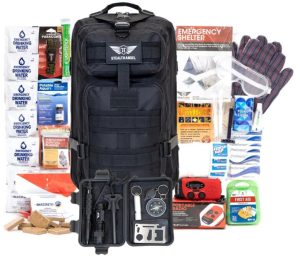
Stealth Angel Survival - 72 Hour Family Emergency Kit

The good (what they did right)

It’s genuinely “72-hour complete” for the basics
This kit isn’t just tools. It explicitly includes 72 hours of food and water, plus water purification tablets, which is a big deal for beginners who often forget calories and hydration until it’s too late.

Clear focus on shelter and warmth
The kit calls out emergency blankets, body warmers, ponchos, and a tube tent. That’s the right direction because in a lot of real emergencies, exposure (cold/wet/wind) ruins people faster than lack of gadgets.

Light and comms are built in
A hand-crank radio, flashlights, and an emergency whistle are the kind of items that matter during outages and storms when your phone is dead or networks are overloaded.

Hygiene is included (morale matters)
Most kits ignore this, but the listing includes a hygiene kit with things like toothpaste and face masks. Staying reasonably clean helps prevent small problems (skin issues, infections) from turning into bigger ones, and it helps you keep your head straight.

Weight looks manageable for a pre-packed kit
The listing shows a package weight of 8 lb. For a pre-built “all-in-one” setup, that’s on the more carryable end compared to many bulky bundles.

The bad (what would make me hesitate)

The packed size suggests tight limits
The listed dimensions are 16 x 10 x 10 inches. That’s compact, which is nice for storage, but it also hints that everything inside is likely small/light-duty and there may not be much room for personal essentials after you add your real-world items.

Water treatment is tablets, not a true filtration solution
Tablets help, but they’re not the same as a filter in terms of taste, speed, and practicality with questionable sources. If you expect silty or nasty water, tablets alone can be an awkward solution.

First aid may be “basic-first-aid” level
The listing calls it a first aid kit, but it doesn’t clearly signal robust trauma coverage. Many pre-packed kits handle scrapes well and struggle with anything more serious.

The “multi-tool kit” can be hit-or-miss
It includes a “multifunctional 8-in-1 kit,” which can be handy, but in pre-packed bundles those components sometimes feel like “good enough once,” not “trust it repeatedly.” Without specifics, durability is an unknown.

Bottom line

This is a solid, beginner-friendly 72-hour kit that covers the important categories: food and water, shelter and warmth, light and communication, first aid, and hygiene. It’s also relatively compact and lighter than many pre-packed “everything kits.” The main tradeoffs are the typical ones for bundles: compact components, tablet-based water purification instead of filtration, and a first-aid setup that may be more basic than people assume.

This kit on Amazon: https://amzn.to/3ZBWZKl

Premium 72 Hour Survival Backpack with Supplies
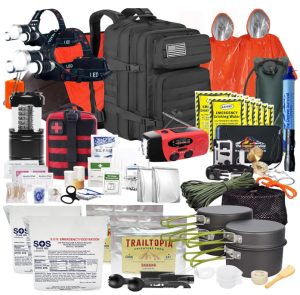
Premium 72 Hour Survival Backpack with Supplies

The good (what they did right)

It includes real calories and real water (not just “survival gear”).
The listing specifies two 3,600-calorie food bars, twelve packets of sealed water, plus two freeze-dried oatmeal breakfasts. That’s a meaningful step up from kits that are basically tools and optimism.

Cooking capability is built in.
A 10-piece stainless steel camp cook set, a folding stove, and a TPU water bladder are called out. That’s practical for extended outages or sheltering somewhere that isn’t home.

Comms and situational awareness get real attention.
The kit highlights upgraded 5-watt 2-way radios, a 2000 mAh emergency NOAA radio, and an upgraded LED COB solar lantern. In storms and blackouts, being able to communicate and get alerts matters.

The pack itself sounds durable (on paper).
They describe a 45-liter 900D tactical backpack, which is the right size category for a 2-person, 72-hour bundle—assuming the stitching and zippers match the spec.

First aid is positioned as comprehensive.
The listing emphasizes a 184-piece first aid kit (and elsewhere references a ~180-piece kit in the page content). Either way, it’s clearly meant to be more than a tiny boo-boo pouch.

The bad (what would make me hesitate)

Weight: this is a heavy “bug out” solution.
The technical details list item weight 20 lb (package weight 21 lb). That’s before adding your personal essentials. For many people, 20 lb turns into “car kit” more than “move fast on foot” kit.

A 72-hour kit for two people is always tight on water in real life.
Even with 12 sealed water packets and a bladder, two people burn through water quickly—especially in heat, stress, or if you’re walking. The kit covers “some water,” but “enough water” is a different standard.

Marketing claims are still marketing claims.
“5x more powerful” for the radios and “twice as bright” for the lantern are stated as upgrades, but those are vendor comparisons, not standardized test results in the listing.

Short warranty window.
The technical details list a 30-day warranty. That’s not automatically bad, but it’s worth noticing for gear you may store for a long time and only discover problems when you finally open and test it.

Who this kit is for

Best fit: a home-and-vehicle preparedness kit for two people (storms, outages, evacuation by car), where weight is less critical than having “a lot of categories covered.”
Not ideal: anyone planning a long on-foot evacuation, because 20 lb is a serious baseline load before personal gear.

Bottom line

This Denver kit looks like a well-rounded, feature-heavy 2-person bundle with food, water, cooking, comms, and a big first-aid component, built around a 45L backpack.
The main drawback is simple: it’s heavy, and at 20 lb it’s closer to a robust emergency “go bag” for vehicle use than a lightweight, foot-mobile bug-out setup.

This kit on Amazon: https://amzn.to/4q2dQky

Choosing the Right Tent

Choosing the Right Tent

Choosing the Right Tent

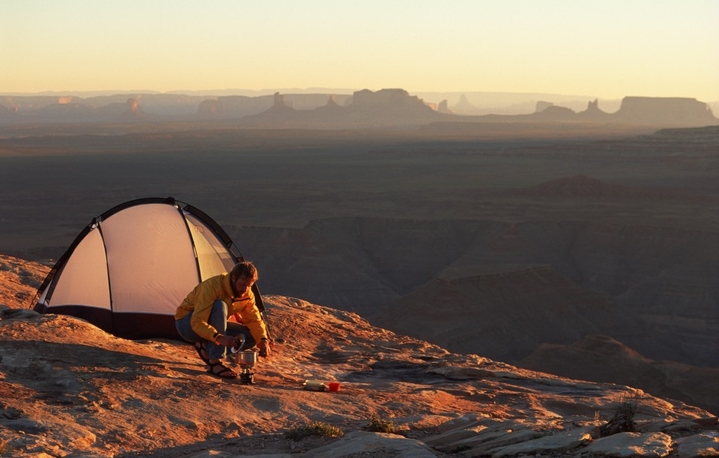
Tents provide you with shelter from the elements such as rain, snow and even wind. Tents also protect you from insects, rodents and snakes. With this in mind, what you want to look for next is how well will you be protected and how much space you will need.

Most tents when they say they are a two-person tent, for example, means two people without their gear. Therefore, if you were camping alone at a minimum you would need a two-person tent for you to have plenty of space for you and your gear.
For family camping trips, you may have sleeping cots you want to use so the tent has to be even bigger to accommodate the cots or even airbeds. You do not want the sleeping cots brushing or bulging out the sides of the tent nor do you want anyone having to sleep with their bodies in contact with the tent sides. Each person should have at least 25 square feet of space. Many tents are low to the ground and require a person to crawl in and out of the tent, so make sure everyone in your group or family can manage this feat.

Choosing the Right Tent

Hikers would want a tent that is lightweight and yet still provides protection from heavy rains, snow and wind. Most tents today designed for hiking and camping are made of nylon and the nylon quality can vary.

The heavier the nylon the greater the protection, but this also makes the tent heavier. Certain tents are guaranteed as waterproof because they use special silicone based coatings on the material and the tent wall is usually single walled which means the moisture inside the tent from your breathing is expelled while the rain is repelled on the other side.

Many tents will have a so-called fly that stretches over the top of the tent to provide a second layer of protection and to help shed water. This type tent is less expensive because the material is not treated as efficiently and moisture may seep in if you make contact or stress the tent wall. The outer covering keeps the rain from pelting the top of the tent however, and allows venting even if it is raining out because many tents will have screened air vents just under the fly.

You want to make sure the tent flooring extends up the walls a few inches making a bathtub shape to prevent rain runoff from seeping in through the floor and wall seams.

Keeping insects out is important so you want to make sure the screening is a good enough quality that it does not tear the minute you stress it. Make sure the zippers have reinforced fabric along the zipper to prevent tearing.

You want your tent to shed water and to break the wind and not be a wind stop, in other words your tent must be designed to where the wind does not blow it over every time it gusts. Dome shaped tents are popular because the winds flows over and around and does not catch the tent itself. You want to ensure once the tent is set up that there are no sags or depressions where snow or rain can collect.
You should inspect any tent before purchasing by going to the camping store to see it set up. Stretch out in it to make sure it is roomy enough for you and your gear. Read the manufactures description closely to see to what extent it is waterproof and if any special sealants are used and can you treat or re-treat the material yourself at some point with a waterproof sealent.