Survival Uses for Cattails

Survival Uses for Cattails

Cattails are plants that typically grow in wetlands and have a flowering spike to them. If you’re ever trapped in the wilderness, then you’re definitely going to come across these plants. To someone with no survival skills, cattails may seem like any other plant you’d find in the woods. But the truth is that cattails can actually help you survive if you’re limited on resources.

Survival Uses for Cattails

The most basic benefit of cattails is using them for food. Believe it or not, their stems grow a couple of inches over the soil during the warmer months of the year. These stems are quite tender which means they can be peeled and then eaten. You can eat them raw if you don’t have a means of cooking them. Otherwise, boiling the stems will make them easier to chew and digest. The heads of the cattails can also be eaten the same way too. Now if you’re in the wild during the late summer and early fall, then pollen will build up on the cattails’ heads which can be used to make sauces. Any other time of the year, you can dig up the roots of the cattails and soak them in water. This will cause starch to be released from them which you can use with a little bit of pollen to make bread.

If you need a roof for your shelter, you can cut up the cattails and weave them together to form squares which resemble shingles. Place these squares on the roof of your makeshift shelter and it will protect you from wind, snow, and rain that may occur. If you’re weaving skills are really good, you can create a sleeping mat or baskets with them too. Baskets can be used to carry food and supplies with you as you travel throughout the wilderness looking for sanctuary. And if you need to start a fire to cook food or keep warm, cattails are a fine substitute for wood when starting a fire.

Lastly, cattails can be turned into medicinal treatments for burns, insect bites, bruises, and scrapes. All you must do is cut open the root of the cattail plant and lightly bruise the portion of it that’s exposed. Then place it over the injury and leave it there for a few minutes. It is not a miracle treatment, but it does have antiseptic properties that will prevent your injury from getting infected.

Best Movies About Survival

Best Movies About Survival

There have been many great movies made about survival over the last few decades. The best ones take place in the wilderness where people are stranded and have to figure out a way to make it back to civilization. Sometimes these movies take place in snowy or forest environments while others take place on remote islands. But regardless of what the circumstances are for the characters, they each have to rely on their own survival skills in order to make it out alive. They don’t have any cell phones, stores, or people they can depend on except themselves. We’ve seen this kind of bravery in the movies “The Edge,” “The Grey,” and “Alive.”

The Edge was a movie about three men in a small plane who crash in the Alaskan wilderness and have to survive. One of the men happened to be knowledgeable in basic survival skills which gave him the ability to create spears and fight off a vicious bear. The Grey had a similar story where a plane crashes in the Alaskan wilderness, but only this time the survivors had to fight off wolves in the wild. Unfortunately, this movie does not end on a positive note. But it at least makes you aware of the dangers of the wild when you are unprepared for it. As for the movie Alive, this was based on a true story about how a Uruguay rugby team got stranded in the Andes Mountains after their plane crashed there. The only way they could survive was to resort to cannibalism.

There have been so many movies made about people or individuals trapped on remote islands. Some of the best ones include “Castaway,” “The Blue Lagoon,” and “Six Days, Seven Nights.” These movies do have their differences but the one thing they prove is that the best way to survive on an island is to camp at the beach. After all, if you can learn how to fish then you’ll have an endless supply of seafood that you can catch in the ocean. As for drinking water, you can use the leaves of plants to help catch rainwater when it falls down from the sky. The characters in these movies finally make it off the island by voyaging away from it and eventually getting rescued.
Survival movies give audiences a glimpse into what it takes to survive on your own in nature without any modern conveniences. Most of these movies have happy endings, while some of them do not. In real life, survival takes persistence and never giving up. That’s what the characters in these movies demonstrate.

Best Flashlights for Prepper

Best Flashlights for Prepper

Best Flashlights for Prepper

Best Flashlights for Prepper

Lighting is an essential thing to have in a survival situation. Most dangerous situations involve darkness of some kind. It could be a power outage from storm or a car breakdown at night with no street lights around. Without some kind of light source to find your way through the dark, you will either have to stay where you are or take the chance of walking in the dark and likely walk into objects while you are doing it. But when you have a light source available you can navigate faster and easier throughout dark areas without any worries.

The most popular light source is from a flashlight. You can purchase a flashlight at almost any retail store that sells hardware or household goods. If you are purchasing a flashlight for survival then make sure you purchase a lot of extra batteries as well. Most handheld flashlights take CR123, AA, AAA or D batteries, so you will want to stock up on those. Now when you go to choose a flashlight, try to pick one that is energy efficient. There are now LED flashlights that don’t drain battery power as fast as the yellow bulb lights. Not only that, but the light shines brighter as well. This would be very resourceful to have in an emergency situation where your lighting supplies are limited. Now if you want a smaller flashlight then you can find them in all different sizes and store that away as well. However, it is good to have at least one big flashlight that emits enough lumens to see clearly in front of you. If you just have a pocket flashlight that emits a tiny amount of light then it won’t do you much good at nighttime when you need to navigate your way through unknown terrain.

Best Flashlights for Prepper

LED Lantern for your home or outdoor activities

LED Lanterns are compact and you can have several of them in your emergency kit. They are great and don’t need much energy. You will need them in case of blackout or emergency situation.

They are also great for outdoor activities.

EDC Tactical Flashlight

Tactical flashlight is a must have for Evey Day Carry kit. You will need it when you least expect that. That is why you always need to have compact, reliable and powerful flashlight. They are available at different prices from many manufacturers.

Car Flashlight

You need to have at least one flashlight in your car. It will help you in emergency situation, when car breaks down and in many other situations.

Such flashlights usually have car charger (12V DC) included.

Use your mobile phone as flashlight

In addition to regular lighting, you should download a flashlight app onto your Smartphone and keep a solar powered charger around for the phone. That way if you are ever without normal access to electricity you can use the solar powered charger to recharge the battery of your Smartphone by exposing it to the rays of the sun. Then with the flashlight app installed on your phone, you can use that as a source of light because it will utilize the light source built into your phone’s camera by making it shine continuously. These lights usually have LED bulbs as well, so you will have energy efficiency and long lasting power. You might also want to have a few spare batteries stored away just in case one battery goes dead. You can never be too careful when preparing for a survival situation that involves your light source.

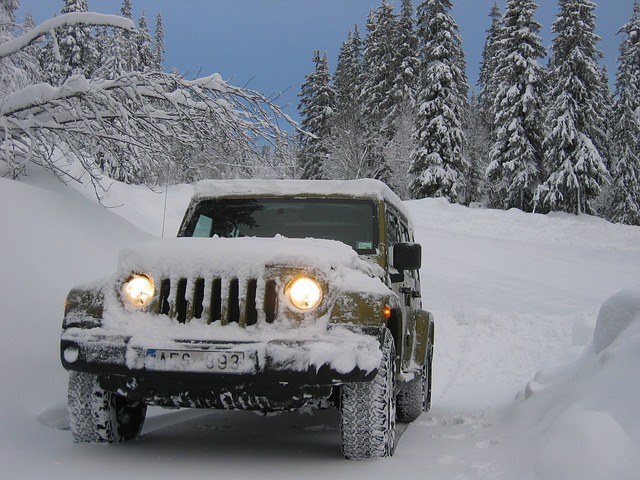
Winter survival when car breaks down far from civilization

Car, Winter, Advices

Winter can be a dangerous time for drivers because of all the heavy snow conditions that clutter up the road. You have inches of snow and ice that can make it difficult for any driver to drive their car safely. But sometimes you can do everything right as a driver and still encounter a problem, such as your car breaking down in a heavy snow storm. Perhaps you are far from civilization when this happens as well. This means you have no luxury of flagging down someone to help you out or let you use their phone. Instead, you are all alone in this uncomfortable situation and will have to depend on yourself in order to get out of it safely.

In these modern times, it should go without saying that you should always have a cell phone with you at all times. It is the perfect wireless link of communication to the outside world, especially if you are stranded somewhere. Now, of course, you might not get a signal on your cell phone if you are in the middle of a terrible storm while stranded. In this case, wait inside your car until the storm passes. Just because your car breaks down doesn’t mean you can’t stay in your car to keep warm. Plus, you might also have a heater in your car that still works. Remember, when a car breaks down it doesn’t always have to do with the battery. As long as you still have power in the battery, then turn the key and turn on the heat. You should also roll down the window a little bit because the snow may be blocking your tailpipe, which could cause carbon monoxide to build up in your car. Wait until the storm passes and then try your cell phone again because you may get a signal with clearer skies. Call for help and have them come to your location to pick you up.

Now let’s assume you don’t have your phone or you cannot get a signal. You have two choices in this situation. You can either continue to wait for help to arrive or you can journey off on foot towards civilization. Both can be risky choices, so you have to plan carefully. If you are in a location where people don’t normally go or if you know nobody is going to be looking for you, then you mine as well walk on foot. But if you think there is a slight chance that someone could come around and find you then stay in your car until they do.

Best Survival Axe (Hatchet)

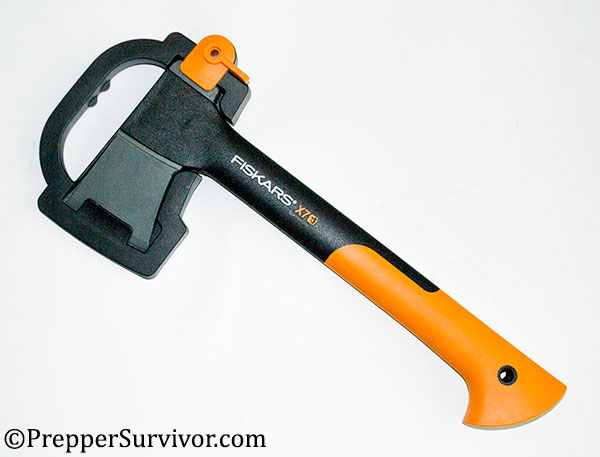
Fiskars X7 Hatchet

Best Survival Axe (Hatchet)

Hatchet is very useful in any survival situation, wilderness, camping and even in the car. For example, if your car stuck in snow or mud, you can use hatchet to chop small trees or large branches and put under wheels.

One of the best axes (hatchets) you can get is Fiskars hatchet:

Fiskars X7 Hatchet
Fiskars X7 Hatchet

This axe is light-weight, compact and very sharp. It is very simple to work with this hatchet. It is compact, so it will be good for hikers. It will be very easy for you to prepare kindling for your campfire.

The handle is made of FiberComp, it is light-weight, ergonomic and very reliable.

Be very careful with Fiskars Hatchet, it is very sharp, it is easy to get injured when using carelessly.

Made in Finland, very sturdy and well made hatchet.

Highly recommended.

Related link: Choosing a Hatchet for Survival

Using solar energy for survival – chargers, water heating etc.

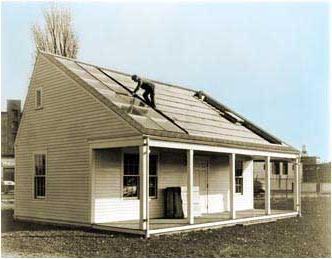
Solar House #1 of Massachusetts Institute of Technology in the United States, built in 1939, used Seasonal thermal energy storage for year-round heating.

Using solar energy for survival – chargers, water heating etc.

There will be a time in the near future when fossil fuels won’t be so readily available anymore. Either that or you may be in a location that doesn’t have access to the modern conveniences of coal powered electricity and fossil fuels. Did you know that there are over 400 million people in India who do not have electricity of any kind because it is too expensive for them? Between this and the low supply of fossil fuels, people will need to switch to an alternative energy source or face the consequences.

Solar House #1 of Massachusetts Institute of Technology in the United States, built in 1939, used Seasonal thermal energy storage for year-round heating.

Solar energy technology is the perfect way for poor people and survivalists to obtain a free power supply. Solar energy panels absorb the UV rays from the sun and turn them into usable energy to work appliances, such as battery chargers and water heaters. If you go on the internet you can find many stores that specialize in selling solar panel products. You can find ovens, cell phone chargers, stoves, lanterns, LED flashlights and outdoor water heaters. The one thing all of these solar products have in common is they use solar panels to absorb the sun’s energy. On the upside, the solar energy that is captured during the day can be stored in the device. That way you can use them at nighttime without requiring the sunlight to activate them.

At the moment, solar energy technology is still very limited in the amount of energy it can actually store. It may be able to charge your cell phone or turn on the lights in a room, but it will take a lot more energy to sustain the power needs of a modern day house. Between television, air conditioners, and computers, these all would require more energy than current solar panels can absorb. However, as a survivalist you won’t be concerned about these conveniences. As long as you can heat up your water and charge your cell phone or laptop batteries, then you will be fine. Just remember to position your solar panels just right in order to absorb as much energy as possible. Generally, those who live in the northern hemisphere should point their panels south and those who live in the southern hemisphere should point their panels north. If you are trying to power your home by putting solar panels on the roof, then you may have a problem if your roof faces east or west. In these cases, you should install the panels on your lawn separately and then connect them to the power grid of your home. Then you can survive on solar energy completely as long as you use simple appliances and small electronics.

Headlamps for survival and preparedness – Petzl Tikka XP Review

Headlamps for survival and preparedness

Headlamps for survival and preparedness

Headlamps for survival and preparedness

Nighttime can be pretty scary when you are lost outside or searching for someone in the dark. The traditional method of finding your way around would be to use a flashlight, but this requires you to use one of your hands to hold it. Since you cannot see 100% clearly with a flashlight, you will need to use your hands to feel around so that you know where you are going. This is similar to how a blind person finds their way around because they cannot see anything and must use their sense of touch to know where they are. However, it doesn’t have to be this complicated for you. There is a simple tool that seeing people can use which will allow them to find their way around in the dark more clearly while keeping their hands free in the process. This tool is called a headlamp. It is basically a head strap with a light attached to the outside of it. The way it works is you put the strap around your head and the light shines outward right in front of you. This means whichever direction you are facing, the light will shine in that direction and you will get to see what is in front of you with the convenience of not having to hold anything in your hands.

Petzl Headlamps

Petzl is one of the well known manufacturers of headlamps. Petzl headlamps are priced little higher than regular headlamps but you get what you pay for.

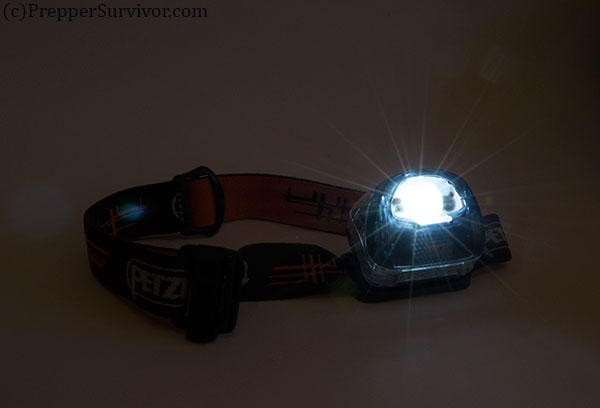
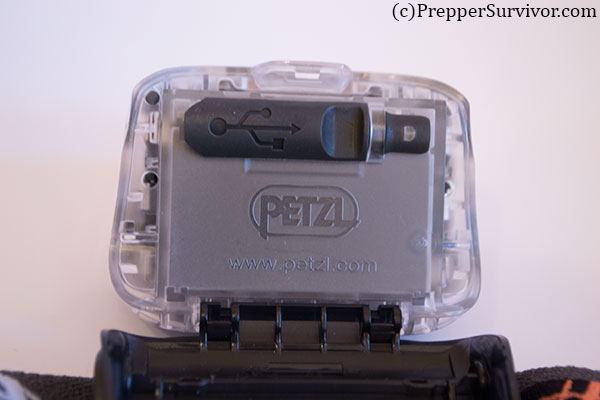
Besides being a hands free device, there are other advantages to having a headlamp in a survival situation. For one thing, Petzl Tikka XP 2 headlamp is lightweight and can easily fit into any emergency supply kit. Plus this new model has LED lighting, which is brighter and shine at a much wider radius than flashlights. They also use less battery power and are even rechargeable with their lithium battery (Petzl Accu Core).

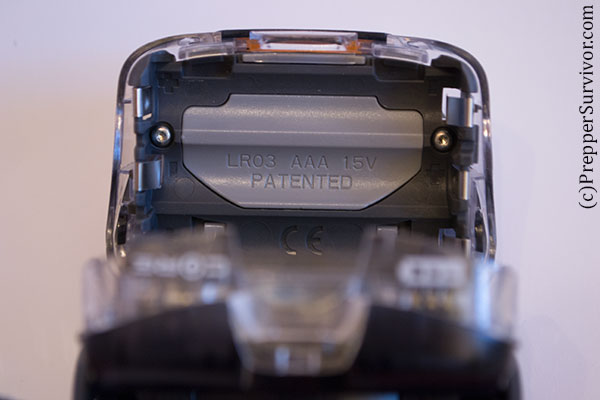
Petzl Tikka XP 2 can be used with regular AAA batteries:

Petzl Tikka XP 2 Core, Compatible with AAA Batteries

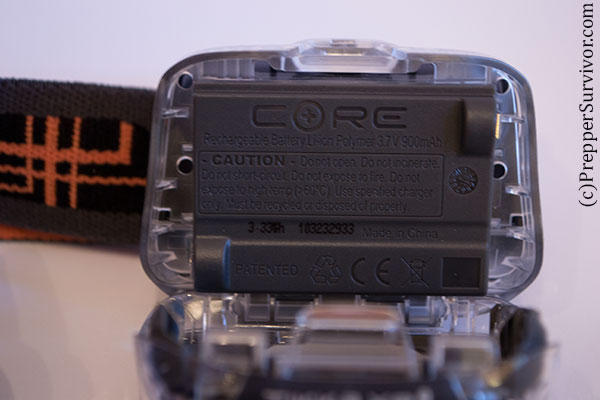
Petzl Accu CORE Rechargeable Lithium Battery can be purchased together with headlamp or separately:

Petzl Accu CORE Rechargeable Lithium Battery

It can be charged 300 times using included charger, after this it will still work but the battery’s capacity is about 30% lower than initially.

Petzl Accu CORE Chargeable Battery

This means you don’t have to keep running out to the store and buy new AAA batteries like with the older models. But since this headlamp is generally used for survival purposes only, chances are you won’t be using the battery power often unless you are in an emergency situation. The most common emergency situation for requiring a headlamp would be when your car breaks down in a secluded area, like in the woods or the desert. Instead of just waiting around your car hoping someone will pass by, you can walk to the nearest town and get help. The headlamp will be the perfect tool in this situation because it will help you find your way in the dark and signal to anyone nearby that you are there. If your headlamp is fully charged, then you will have over 4 hours of battery life in Maximum mode and 35 hours in Economic mode before needing to recharge again. This gives you plenty of time to find help before it is too late. You can also connect Petzl Tikka XP 2 headlamp to your PC and personalize your lighting using OS by Petzl.

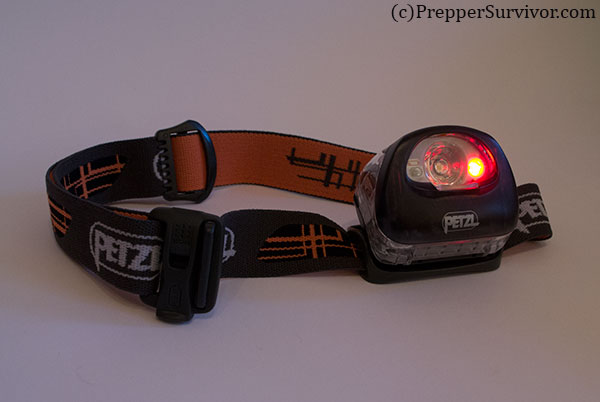
Petzl Tikka XP 2 has five lighting modes (three continuous and two blinking) and Wide Angle lens with open-close feature, allowing you to choose between a long distance focalized beam and flood beam proximity lighting.

Red light will preserve your night vision or to become a blinking light for safety purposes:

Petzl Tikka XP 2 has Red Light Mode to Preserve Night Vision

Just remember when you go shopping for a headlamp, make sure you buy one that is durable and water resistant. If you are outside in an emergency situation then chances are it will be raining, which only makes finding your way in the dark much more difficult. Don’t worry though because headlamps are very inexpensive. One of the most expensive models is $60, which is an affordable investment for a tool that could be the means of your survival. Therefore, it is definitely worth the money.

Best Emergency Water Sources for Survival

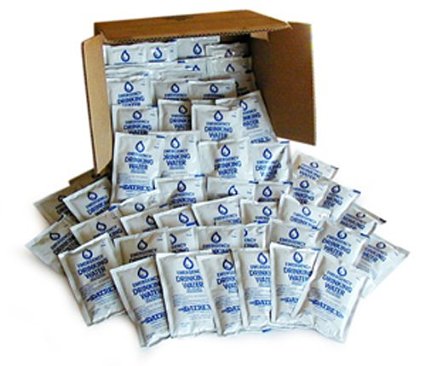
Datrex Emergency Survival Water Pouch

Best Emergency Water Sources for Survival

Datrex Emergency Survival Water Pouch

Datrex Emergency Survival Water Pouch

Emergency purified water for immediate use; lightweight and extremely compact(64)-125 ml sachets
Loss potential minimized due to individual sachets and ideal for storage
Easy to dispense from a premeasured sachet; superior packaging materials for optimum durability in your survival kit
USCG, Canadian Coast Guard, EC and NZ approval (NSN 8960 0112 4454 3)
5 years shelf life

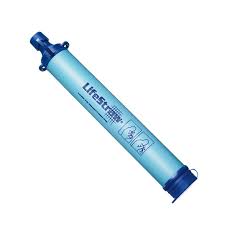
Lifestraw

Lifestraw
Lifestraw

Award-winning LifeStraw has been used by millions around the globe since 2005
Removes minimum 99.9999% of waterborne bacteria (>LOG 6 reduction) and surpasses EPA standards for water filters
Removes minimum 99.9% of waterborne protozoan parasites (>LOG 3 reduction) and filters to an amazing 0.2 microns
Filters up to 1000 liters of contaminated water WITHOUT iodine, chlorine, or other chemicals
Comes in a sealed bag, perfect for storing for emergencies

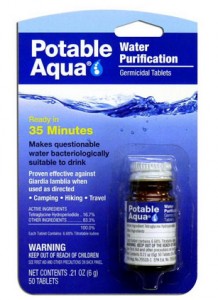
Potable Aqua Water Treatment Tablets

Potable Aqua Water Treatment Tablets

Potable Aqua Water Purification Iodine Tablets (50 Tablets)
Iodine tablets designed to make contaminated water suitable for drinking
Tablets prove effective against Giardia lamblia when used as directed
Intended for short-term or limited emergency use only
Water is ready within 30 minutes; neutralizes iodine aftertaste and color
Ideal for campers, travelers, hikers, militaries, and emergency organizations

Best Tents for Survival

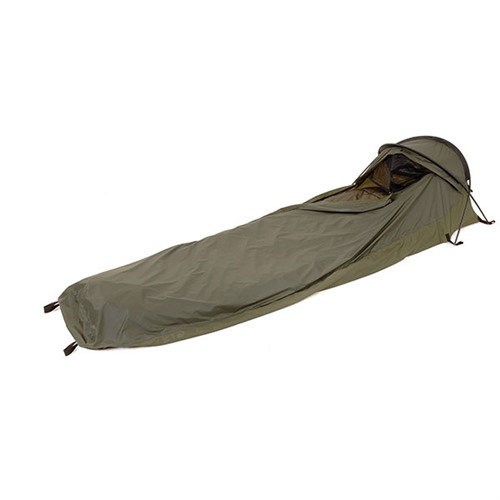
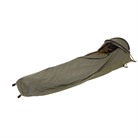
Snugpak Stratosphere 1-Person Tent

Best Tents for Survival

Snugpak Stratosphere 1-Person Tent

Snugpak Stratosphere 1-Person Tent is the best and the lightest one-person tent you can find!

Snugpak Stratosphere 1-Person Tent

MUCH SMALLER than a standard tent but with all the features, supplied with seven ultralight alloy Y type stakes/pegs and packs into its own compression sack.

Ultra compact 1 person shelter
Fabric – Top; 50D Nylon Ripstop with 5000mm waterproof polyurethane coating
Fabric – Bottom; 210T Nylon with 8000mm waterproof polyurethane coating
Zip; Full Length side Zip
All seams are taped sealed
Stands up to severe weather
Makes sure you stay dry
Poles; Aluminum with Screw Lock Tips
Small pack size: Dimensions: 90” x 37” x 42”
Weight: 39oz (Including Poles, Pegs and Compression Sack)

Recommended Product:
Snugpak Stratosphere 1-Person Tent

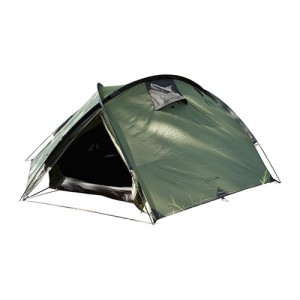
Snugpak Bunker 3-Person Tent

Snugpak Bunker 3-Person Tent

The Bunker™ by Snugpak® is built and designed for long term hard use. With it’s 5000mm PU Coated Fly it can handle large amounts of rain as well as surpasses many other tent manufacturers with a much less superior fabric. The Bunker™ has two doors and two vents as well as all types of extras like internal mesh pockets, No-See-Um-Mesh, all seams are seam taped and much more. The Bunker™ is a Fly First pitch type tent, which allows the users to quickly set up the fly and seek shelter from the elements.

Recommended Product:
Snugpak Bunker 3-Person Tent

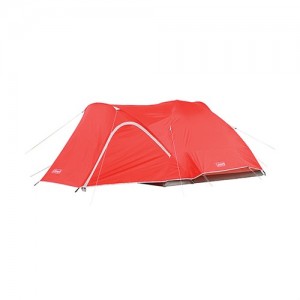
Coleman Hooligan 4 Tent – Shelter for the Group

Coleman Hooligan 4 Tent

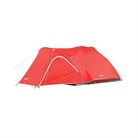
4 person Coleman Hooligan tent. Your entire hiking group will sleep protected from the weather inside a Coleman® Hooligan™ 4 Tent with full rainfly. The lightweight, two-pole design is easy to carry and easy to set up. The three-season tent is designed for most conditions—mild to harsh—backpackers are sure to encounter. A fully-covered vestibule helps keep the inside of the tent clean by allowing for dry entry and blocking the wind around the door. When the weather is warm, take the rainfly off to enjoy the incredible ventilation from the mesh inner tent. Insta-Clip™ Pole Attachments stand up to high wind and the WeatherTec™ System’s patented welded floors and inverted protected seams help ensure you stay dry. The snag-free, continuous pole sleeves mean you only have to feed the poles once—reducing setup time to just 10 minutes. The 9 ft. x 7 ft. (2.74 m x 2.13 m) floor is large enough to fit four people.

Recommended Product:
Coleman Hooligan 4 Tent

Emergency Shelter Tent

Emergency Shelter Tent

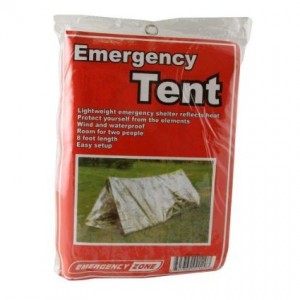
This emergency tent is only for use when you have no choice. Put it in your car, in a pocket of your ski jacket, in backpack, everywhere. This tent is cheap and compact but can save life.

The Emergency Tent is a lightweight and compact emergency shelter. It is wind and waterproof and easy to set up. It is 8 feet long and roomy enough for two people.

3 Best Bug Out Bags (Updated 2026)

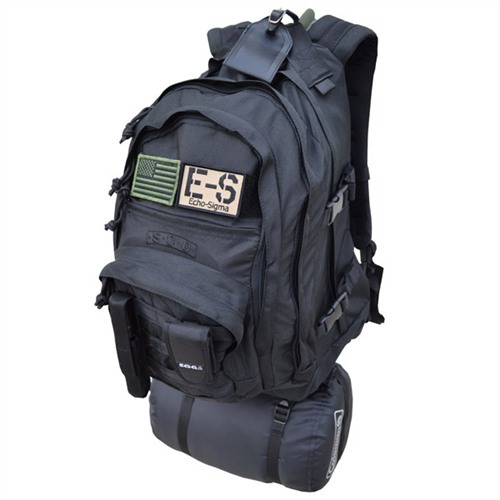
Echo-Sigma Emergency Bug Out Bag

3 Best Bug Out Bags

If you want a Bug Out Bag that actually helps you in a real “grab-and-go” moment, you need more than cool-looking gear and a tactical vibe. You need a bag that fits your body, matches your local climate, and carries the essentials without turning you into a slow, sweaty pack mule after 20 minutes.

In this post, I’ll show you the 7 best bug out bags worth considering right now, with clear reasons for each pick. Some are perfect for ultralight mobility, others shine for family-ready capacity, and a couple are built for hard use and bad weather. I’ll also point out what most beginners get wrong, so you don’t waste money on the wrong size, the wrong features, or a bag that falls apart when you need it most.

Quick note: the “best” bag depends on your plan. Are you leaving on foot or by car? Urban or rural? One day or three? I’ll keep the picks practical and explain who each bag is best for—so you can choose fast and feel confident.

TacPreps 72-Hour Survival Kit
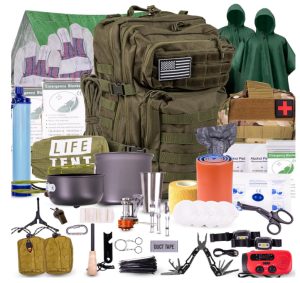

TacPreps 72-Hour Survival Kit | Emergency Bug Out Bag with First Aid, Water Filter, Food, Tools | 45L Tactical Backpack for Camping, Hiking, Outdoor

Here’s my take on the TacPreps 72-Hour Survival Kit / Emergency Bug Out Bag (45L), “2 Persons, Deluxe without Food” based on the listing specs and the included item breakdown. I have not field-tested this exact kit, so I’m reviewing it like a gear-check audit: what’s smart, what’s missing, and what I’d upgrade before trusting it.

The good (what they did right)

The “big rocks” are covered.
A beginner kit should handle the basics first: water, shelter, heat, light, and first aid. This one clearly aims at that. The listing highlights a water filter, an IFAK-style first aid kit, and a 45L pack with compartments.

Shelter package looks more complete than most pre-packed kits.
The comparison table shows an emergency tent, bivvy bags, paracord, emergency blankets, and ponchos included for the 2-person kits, which is a solid baseline for short-term exposure risk.

First aid is not just band-aids.
The IFAK list includes alcohol pads, sterile pads, a trauma bandage, elastic bandage, a splint, scissors, an emergency blanket, and a CPR barrier device. That’s more thoughtful than many “survival kit” bundles that inflate piece count with junk.

The tool selection focuses on utility, not gimmicks.
The listing calls out practical stuff like a headlamp, saw, compass with whistle, multitool, duct tape, gloves, and zip ties, plus a solar radio/light combo. Those are realistic problem-solvers for outages and messy evacuations.

The bad (what would make me hesitate)

Weight and bulk can kill the whole idea of a bug-out bag.
The package weight is listed as 18 pounds. That’s before you add your personal items (water containers, extra layers, meds, documents, etc.). For many beginners, heavy bags end up living in a closet instead of being truly grab-and-go.

“171 pieces” is not the same as capability.
Piece counts often pad value perception. What matters is: do you have enough calories, enough water capacity, and enough insulation for your climate. This version is “without food,” so you’re not buying the most important part of “72-hour” for two people.

Performance claims deserve real-world verification.
The listing claims the water filter can process up to 1,300 gallons, and it also mentions emergency water pouches with a 5-year shelf life in some variants. Claims like this can be true under ideal conditions, but you should still test the filter, practice setup, and validate what you can actually carry and use.

Return policy risk.
The page shows the item as non-returnable (with exceptions for damage/defect). That raises the stakes. With pre-packed kits, you really want the option to return if the bag stitching, zippers, or included components are not what you expected.

Who this kit is for

Best fit: someone starting from zero who wants a foundation kit to build on, especially if you’re preparing for power outages, short evacuations, or vehicle-based bug-out.
Not ideal: people who plan to move on foot for long distances, or anyone who needs a lightweight setup.

What I would add or swap (small changes, big payoff)

Water carrying, not just filtering. Add at least one durable bottle or bladder per person. Filters are useless if you cannot carry clean water.

Real warmth. Add insulating layers, hat, gloves, and socks appropriate to your region. Emergency blankets help, but clothing wins.

Personal meds and documents. Meds, copies of IDs, emergency contacts, some cash.

A simple checklist and a practice run. Pack it, carry it for 30 minutes, and adjust. Most bug out failures are comfort and fit issues, not missing gadgets.

Bottom line

This kit looks like a good starter framework with decent coverage of shelter and first aid, and it includes several practical tools.
But the weight, the “without food” limitation for a “72-hour” label, and the non-returnable status are real drawbacks.

This kit on Amazon: https://amzn.to/4k4kp4O

Stealth Angel Survival – 72 Hour Family Emergency Kit – 1-5 Person Survival Bag for Earthquakes, Hurricanes, and Other Natural Disasters
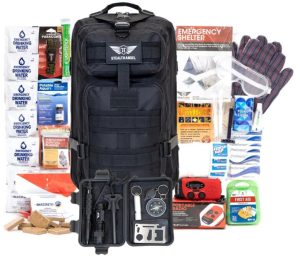
Stealth Angel Survival - 72 Hour Family Emergency Kit

The good (what they did right)

It’s genuinely “72-hour complete” for the basics
This kit isn’t just tools. It explicitly includes 72 hours of food and water, plus water purification tablets, which is a big deal for beginners who often forget calories and hydration until it’s too late.

Clear focus on shelter and warmth
The kit calls out emergency blankets, body warmers, ponchos, and a tube tent. That’s the right direction because in a lot of real emergencies, exposure (cold/wet/wind) ruins people faster than lack of gadgets.

Light and comms are built in
A hand-crank radio, flashlights, and an emergency whistle are the kind of items that matter during outages and storms when your phone is dead or networks are overloaded.

Hygiene is included (morale matters)
Most kits ignore this, but the listing includes a hygiene kit with things like toothpaste and face masks. Staying reasonably clean helps prevent small problems (skin issues, infections) from turning into bigger ones, and it helps you keep your head straight.

Weight looks manageable for a pre-packed kit
The listing shows a package weight of 8 lb. For a pre-built “all-in-one” setup, that’s on the more carryable end compared to many bulky bundles.

The bad (what would make me hesitate)

The packed size suggests tight limits
The listed dimensions are 16 x 10 x 10 inches. That’s compact, which is nice for storage, but it also hints that everything inside is likely small/light-duty and there may not be much room for personal essentials after you add your real-world items.

Water treatment is tablets, not a true filtration solution
Tablets help, but they’re not the same as a filter in terms of taste, speed, and practicality with questionable sources. If you expect silty or nasty water, tablets alone can be an awkward solution.

First aid may be “basic-first-aid” level
The listing calls it a first aid kit, but it doesn’t clearly signal robust trauma coverage. Many pre-packed kits handle scrapes well and struggle with anything more serious.

The “multi-tool kit” can be hit-or-miss
It includes a “multifunctional 8-in-1 kit,” which can be handy, but in pre-packed bundles those components sometimes feel like “good enough once,” not “trust it repeatedly.” Without specifics, durability is an unknown.

Bottom line

This is a solid, beginner-friendly 72-hour kit that covers the important categories: food and water, shelter and warmth, light and communication, first aid, and hygiene. It’s also relatively compact and lighter than many pre-packed “everything kits.” The main tradeoffs are the typical ones for bundles: compact components, tablet-based water purification instead of filtration, and a first-aid setup that may be more basic than people assume.

This kit on Amazon: https://amzn.to/3ZBWZKl

Premium 72 Hour Survival Backpack with Supplies
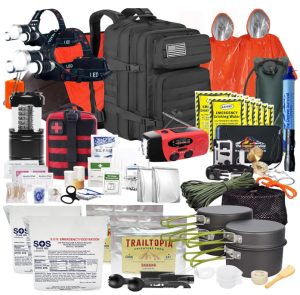
Premium 72 Hour Survival Backpack with Supplies

The good (what they did right)

It includes real calories and real water (not just “survival gear”).
The listing specifies two 3,600-calorie food bars, twelve packets of sealed water, plus two freeze-dried oatmeal breakfasts. That’s a meaningful step up from kits that are basically tools and optimism.

Cooking capability is built in.
A 10-piece stainless steel camp cook set, a folding stove, and a TPU water bladder are called out. That’s practical for extended outages or sheltering somewhere that isn’t home.

Comms and situational awareness get real attention.
The kit highlights upgraded 5-watt 2-way radios, a 2000 mAh emergency NOAA radio, and an upgraded LED COB solar lantern. In storms and blackouts, being able to communicate and get alerts matters.

The pack itself sounds durable (on paper).
They describe a 45-liter 900D tactical backpack, which is the right size category for a 2-person, 72-hour bundle—assuming the stitching and zippers match the spec.

First aid is positioned as comprehensive.
The listing emphasizes a 184-piece first aid kit (and elsewhere references a ~180-piece kit in the page content). Either way, it’s clearly meant to be more than a tiny boo-boo pouch.

The bad (what would make me hesitate)

Weight: this is a heavy “bug out” solution.
The technical details list item weight 20 lb (package weight 21 lb). That’s before adding your personal essentials. For many people, 20 lb turns into “car kit” more than “move fast on foot” kit.

A 72-hour kit for two people is always tight on water in real life.
Even with 12 sealed water packets and a bladder, two people burn through water quickly—especially in heat, stress, or if you’re walking. The kit covers “some water,” but “enough water” is a different standard.

Marketing claims are still marketing claims.
“5x more powerful” for the radios and “twice as bright” for the lantern are stated as upgrades, but those are vendor comparisons, not standardized test results in the listing.

Short warranty window.
The technical details list a 30-day warranty. That’s not automatically bad, but it’s worth noticing for gear you may store for a long time and only discover problems when you finally open and test it.

Who this kit is for

Best fit: a home-and-vehicle preparedness kit for two people (storms, outages, evacuation by car), where weight is less critical than having “a lot of categories covered.”
Not ideal: anyone planning a long on-foot evacuation, because 20 lb is a serious baseline load before personal gear.

Bottom line

This Denver kit looks like a well-rounded, feature-heavy 2-person bundle with food, water, cooking, comms, and a big first-aid component, built around a 45L backpack.
The main drawback is simple: it’s heavy, and at 20 lb it’s closer to a robust emergency “go bag” for vehicle use than a lightweight, foot-mobile bug-out setup.

This kit on Amazon: https://amzn.to/4q2dQky