Bushcraft and Wilderness Survival Skills for Beginners

bushcraft survival beginners

“It is not the strongest or the most intelligent who will survive but those who can best manage change.”
― Leon C. Megginson


What is Bushcraft? Bushcraft is a skill that is used and needed by people to survive and even thrive in the wild. This skill however isn’t going to be learned by reading books or watching documentaries (although it will help) but by experience and mistakes. Learning bushcraft will require not only determination, patience, or time but also skills and quick wits. Being the strongest doesn’t always means the one who survives but being smart will increase your chance.

Read more

Survival Checklist

Survival Checklist

Survival Checklist

Survival Checklist
Survival Checklist

When you are in a situation where you cannot get help from anyone because you are stranded somewhere, you need to know how to survive. The best way to handle a survival situation is to prepare ahead of time. This means purchasing all of the necessary items that you will need in case a disaster strikes and you need to survive. This could be a hurricane, tornado, terrorist threat or any other tragedy that limits your ability to get help from the officials in your city or town.

The first item to put on your survival checklist is water. There is no way you will be able to survive anywhere without fresh water to drink. Since water doesn’t expire or spoil, you can just purchase gallon jugs of water or packages of bottled water at your local supermarket. Make sure you get the natural spring water and not the kind that has added minerals to it. The next item on your survival checklist should be food. To get more specific, you will need food that comes in cans because you’ll want to be able to store it away for awhile until disaster strikes. Next you will want to think about the tools you will need in a disaster. Some essential tools include a flashlight, solar powered smartphone charger, smartphone, poncho, knife, lighter, matches and a can opener. The smartphone and solar charger is important because it may be your only link to the outside world if you are stranded somewhere. All of the other tools will help you survive in your current environment until help arrives or until you find your way out of wherever you are.

Some additional items to put on your survival checklist are clothes and a first aid kit. If you are living in the north then you will obviously want to have jackets and sweaters stored away for emergencies. That way you will be able to bare the colder temperatures, especially if it is snowing outside. The first aid kit is also important because it has band aids and disinfectant formulas to help treat scrapes and cuts if you get hurt.

Finally, you should probably include a gun on your checklist. If you are in an isolated environment that requires you to survive on your own, then chances are there will be others in that area in the same situation. This could mean they will try to steal your supplies or possibly kill you for your supplies. By having a gun with ammo clips ready, you will be able to fight off dangerous people or animals that you may come across in a survival situation.

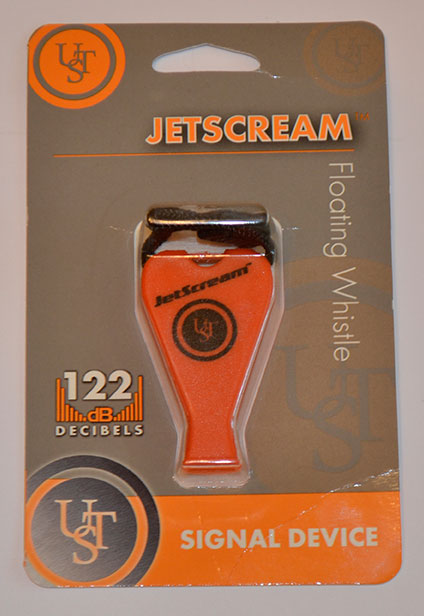
Ultimate Survival Technologies JetScream Whistle

Ultimate Survival Technologies JetScream Whistle

Ultimate Survival Technologies JetScream Whistle

Ultimate Survival Technologies JetScream Whistle

Very nice, inexpensive and useful tool. You should buy one for your kid and one for survival kit.

122db whistle can be heard over most natural and man made noises
Pea-less, this whistle will never rust or freeze up and it floats
Compact design fits comfortably in your pocket
Short lanyard allow you to hook it to your backpack, wrist, keychain, purse, anywhere it is easily accessible
Made in the USA

Emergency thermal (space) blanket and how/when to use it

Emergency thermal (space) blanket

Emergency thermal (space) blanket and how/when to use it

Emergency thermal (space) blanket

The emergency thermal blanket has many names. The most popular nickname is the space blanket because it was developed by NASA to protect astronauts from rough space environments and temperatures. More importantly, these blankets are resistant to the ultraviolet radiation from the sun. They are made out of a material called silver mylar. This material is made up of a plastic called polyimide, which is heat resistant and coated with a special metallic reflecting material to drive away radiation. Since outer space gives astronauts zero protection from sunrays because there is no atmosphere, the emergency thermal blanket is their only protection. The silver mylar material is built into their space suits, and was even built into the lunar modules of the Apollo era.

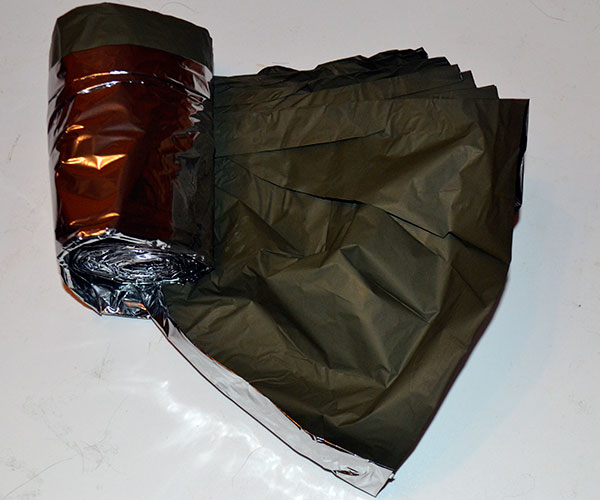
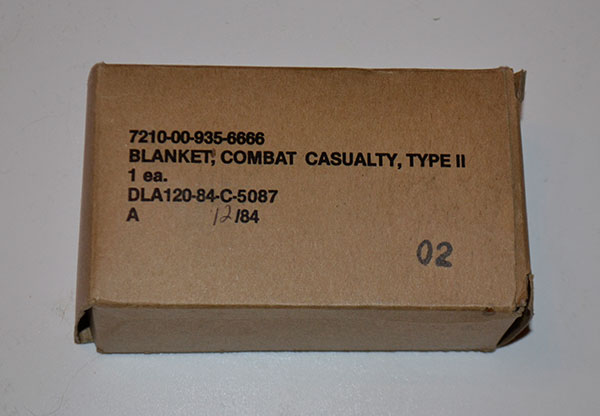
One side of the military thermal blanket is green:

Emergency thermal (space) blanket

In modern times, space blankets have expanded beyond astronomical use. Now they are a popular consumer item generally found in first aid and emergency survival kits. The number one use for it is to protect yourself from the cold if you are stranded outside. Despite the thinness of the silver mylar, it can actually keep a person very warm when completely wrapped around their body. It does this by preventing your body from losing heat due to the cold. Space blankets also offer protection against water and wind as well. For example, if you were outside during a thunderstorm with heavy winds and rain, you would barely feel any impact from the wind on your skin if you were wrapped in a space blanket. As for the rain, none of your clothes underneath the blanket would get wet. This will come in very handy if you are stranded in the woods and want to prevent yourself from catching pneumonia during a heavy rainstorm. Plus if you have ever watched a marathon runner finish a race outside in cold weather, you will likely find somebody giving them a space blanket as soon as they are done. This is a safety precaution to prevent the runner from getting hypothermia.

In pop culture, space blankets and silver mylar have often been associated with aliens and extraterrestrial life. Some claim that aliens were the inventors of the material and that it was discovered by military intelligence after the UFO Roswell crash of 1947. Some may believe this while others will claim it to be science fiction. One thing is for sure, silver mylar is definitely a very unique material that is light weight and easy to use in an emergency situation outdoors.

3 Best Bug Out Bags (Updated 2026)

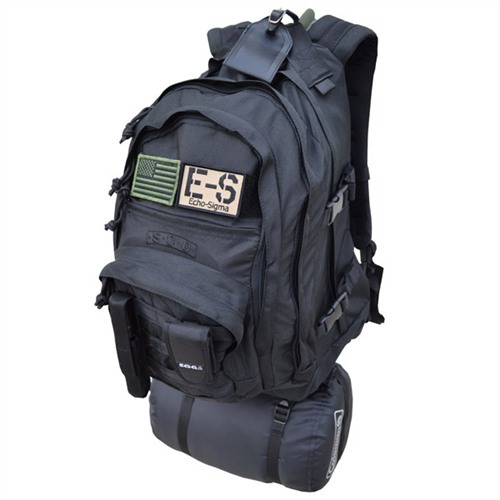
Echo-Sigma Emergency Bug Out Bag

3 Best Bug Out Bags

If you want a Bug Out Bag that actually helps you in a real “grab-and-go” moment, you need more than cool-looking gear and a tactical vibe. You need a bag that fits your body, matches your local climate, and carries the essentials without turning you into a slow, sweaty pack mule after 20 minutes.

In this post, I’ll show you the 7 best bug out bags worth considering right now, with clear reasons for each pick. Some are perfect for ultralight mobility, others shine for family-ready capacity, and a couple are built for hard use and bad weather. I’ll also point out what most beginners get wrong, so you don’t waste money on the wrong size, the wrong features, or a bag that falls apart when you need it most.

Quick note: the “best” bag depends on your plan. Are you leaving on foot or by car? Urban or rural? One day or three? I’ll keep the picks practical and explain who each bag is best for—so you can choose fast and feel confident.

TacPreps 72-Hour Survival Kit
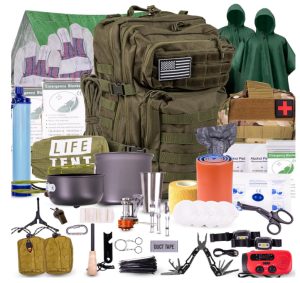

TacPreps 72-Hour Survival Kit | Emergency Bug Out Bag with First Aid, Water Filter, Food, Tools | 45L Tactical Backpack for Camping, Hiking, Outdoor

Here’s my take on the TacPreps 72-Hour Survival Kit / Emergency Bug Out Bag (45L), “2 Persons, Deluxe without Food” based on the listing specs and the included item breakdown. I have not field-tested this exact kit, so I’m reviewing it like a gear-check audit: what’s smart, what’s missing, and what I’d upgrade before trusting it.

The good (what they did right)

The “big rocks” are covered.
A beginner kit should handle the basics first: water, shelter, heat, light, and first aid. This one clearly aims at that. The listing highlights a water filter, an IFAK-style first aid kit, and a 45L pack with compartments.

Shelter package looks more complete than most pre-packed kits.
The comparison table shows an emergency tent, bivvy bags, paracord, emergency blankets, and ponchos included for the 2-person kits, which is a solid baseline for short-term exposure risk.

First aid is not just band-aids.
The IFAK list includes alcohol pads, sterile pads, a trauma bandage, elastic bandage, a splint, scissors, an emergency blanket, and a CPR barrier device. That’s more thoughtful than many “survival kit” bundles that inflate piece count with junk.

The tool selection focuses on utility, not gimmicks.
The listing calls out practical stuff like a headlamp, saw, compass with whistle, multitool, duct tape, gloves, and zip ties, plus a solar radio/light combo. Those are realistic problem-solvers for outages and messy evacuations.

The bad (what would make me hesitate)

Weight and bulk can kill the whole idea of a bug-out bag.
The package weight is listed as 18 pounds. That’s before you add your personal items (water containers, extra layers, meds, documents, etc.). For many beginners, heavy bags end up living in a closet instead of being truly grab-and-go.

“171 pieces” is not the same as capability.
Piece counts often pad value perception. What matters is: do you have enough calories, enough water capacity, and enough insulation for your climate. This version is “without food,” so you’re not buying the most important part of “72-hour” for two people.

Performance claims deserve real-world verification.
The listing claims the water filter can process up to 1,300 gallons, and it also mentions emergency water pouches with a 5-year shelf life in some variants. Claims like this can be true under ideal conditions, but you should still test the filter, practice setup, and validate what you can actually carry and use.

Return policy risk.
The page shows the item as non-returnable (with exceptions for damage/defect). That raises the stakes. With pre-packed kits, you really want the option to return if the bag stitching, zippers, or included components are not what you expected.

Who this kit is for

Best fit: someone starting from zero who wants a foundation kit to build on, especially if you’re preparing for power outages, short evacuations, or vehicle-based bug-out.
Not ideal: people who plan to move on foot for long distances, or anyone who needs a lightweight setup.

What I would add or swap (small changes, big payoff)

Water carrying, not just filtering. Add at least one durable bottle or bladder per person. Filters are useless if you cannot carry clean water.

Real warmth. Add insulating layers, hat, gloves, and socks appropriate to your region. Emergency blankets help, but clothing wins.

Personal meds and documents. Meds, copies of IDs, emergency contacts, some cash.

A simple checklist and a practice run. Pack it, carry it for 30 minutes, and adjust. Most bug out failures are comfort and fit issues, not missing gadgets.

Bottom line

This kit looks like a good starter framework with decent coverage of shelter and first aid, and it includes several practical tools.
But the weight, the “without food” limitation for a “72-hour” label, and the non-returnable status are real drawbacks.

This kit on Amazon: https://amzn.to/4k4kp4O

Stealth Angel Survival – 72 Hour Family Emergency Kit – 1-5 Person Survival Bag for Earthquakes, Hurricanes, and Other Natural Disasters
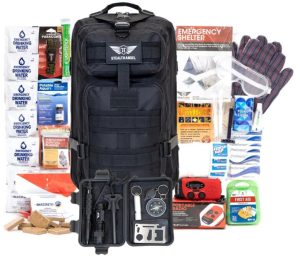
Stealth Angel Survival - 72 Hour Family Emergency Kit

The good (what they did right)

It’s genuinely “72-hour complete” for the basics
This kit isn’t just tools. It explicitly includes 72 hours of food and water, plus water purification tablets, which is a big deal for beginners who often forget calories and hydration until it’s too late.

Clear focus on shelter and warmth
The kit calls out emergency blankets, body warmers, ponchos, and a tube tent. That’s the right direction because in a lot of real emergencies, exposure (cold/wet/wind) ruins people faster than lack of gadgets.

Light and comms are built in
A hand-crank radio, flashlights, and an emergency whistle are the kind of items that matter during outages and storms when your phone is dead or networks are overloaded.

Hygiene is included (morale matters)
Most kits ignore this, but the listing includes a hygiene kit with things like toothpaste and face masks. Staying reasonably clean helps prevent small problems (skin issues, infections) from turning into bigger ones, and it helps you keep your head straight.

Weight looks manageable for a pre-packed kit
The listing shows a package weight of 8 lb. For a pre-built “all-in-one” setup, that’s on the more carryable end compared to many bulky bundles.

The bad (what would make me hesitate)

The packed size suggests tight limits
The listed dimensions are 16 x 10 x 10 inches. That’s compact, which is nice for storage, but it also hints that everything inside is likely small/light-duty and there may not be much room for personal essentials after you add your real-world items.

Water treatment is tablets, not a true filtration solution
Tablets help, but they’re not the same as a filter in terms of taste, speed, and practicality with questionable sources. If you expect silty or nasty water, tablets alone can be an awkward solution.

First aid may be “basic-first-aid” level
The listing calls it a first aid kit, but it doesn’t clearly signal robust trauma coverage. Many pre-packed kits handle scrapes well and struggle with anything more serious.

The “multi-tool kit” can be hit-or-miss
It includes a “multifunctional 8-in-1 kit,” which can be handy, but in pre-packed bundles those components sometimes feel like “good enough once,” not “trust it repeatedly.” Without specifics, durability is an unknown.

Bottom line

This is a solid, beginner-friendly 72-hour kit that covers the important categories: food and water, shelter and warmth, light and communication, first aid, and hygiene. It’s also relatively compact and lighter than many pre-packed “everything kits.” The main tradeoffs are the typical ones for bundles: compact components, tablet-based water purification instead of filtration, and a first-aid setup that may be more basic than people assume.

This kit on Amazon: https://amzn.to/3ZBWZKl

Premium 72 Hour Survival Backpack with Supplies
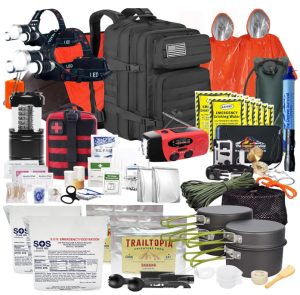
Premium 72 Hour Survival Backpack with Supplies

The good (what they did right)

It includes real calories and real water (not just “survival gear”).
The listing specifies two 3,600-calorie food bars, twelve packets of sealed water, plus two freeze-dried oatmeal breakfasts. That’s a meaningful step up from kits that are basically tools and optimism.

Cooking capability is built in.
A 10-piece stainless steel camp cook set, a folding stove, and a TPU water bladder are called out. That’s practical for extended outages or sheltering somewhere that isn’t home.

Comms and situational awareness get real attention.
The kit highlights upgraded 5-watt 2-way radios, a 2000 mAh emergency NOAA radio, and an upgraded LED COB solar lantern. In storms and blackouts, being able to communicate and get alerts matters.

The pack itself sounds durable (on paper).
They describe a 45-liter 900D tactical backpack, which is the right size category for a 2-person, 72-hour bundle—assuming the stitching and zippers match the spec.

First aid is positioned as comprehensive.
The listing emphasizes a 184-piece first aid kit (and elsewhere references a ~180-piece kit in the page content). Either way, it’s clearly meant to be more than a tiny boo-boo pouch.

The bad (what would make me hesitate)

Weight: this is a heavy “bug out” solution.
The technical details list item weight 20 lb (package weight 21 lb). That’s before adding your personal essentials. For many people, 20 lb turns into “car kit” more than “move fast on foot” kit.

A 72-hour kit for two people is always tight on water in real life.
Even with 12 sealed water packets and a bladder, two people burn through water quickly—especially in heat, stress, or if you’re walking. The kit covers “some water,” but “enough water” is a different standard.

Marketing claims are still marketing claims.
“5x more powerful” for the radios and “twice as bright” for the lantern are stated as upgrades, but those are vendor comparisons, not standardized test results in the listing.

Short warranty window.
The technical details list a 30-day warranty. That’s not automatically bad, but it’s worth noticing for gear you may store for a long time and only discover problems when you finally open and test it.

Who this kit is for

Best fit: a home-and-vehicle preparedness kit for two people (storms, outages, evacuation by car), where weight is less critical than having “a lot of categories covered.”
Not ideal: anyone planning a long on-foot evacuation, because 20 lb is a serious baseline load before personal gear.

Bottom line

This Denver kit looks like a well-rounded, feature-heavy 2-person bundle with food, water, cooking, comms, and a big first-aid component, built around a 45L backpack.
The main drawback is simple: it’s heavy, and at 20 lb it’s closer to a robust emergency “go bag” for vehicle use than a lightweight, foot-mobile bug-out setup.

This kit on Amazon: https://amzn.to/4q2dQky

Choosing the Right Sleeping Bag

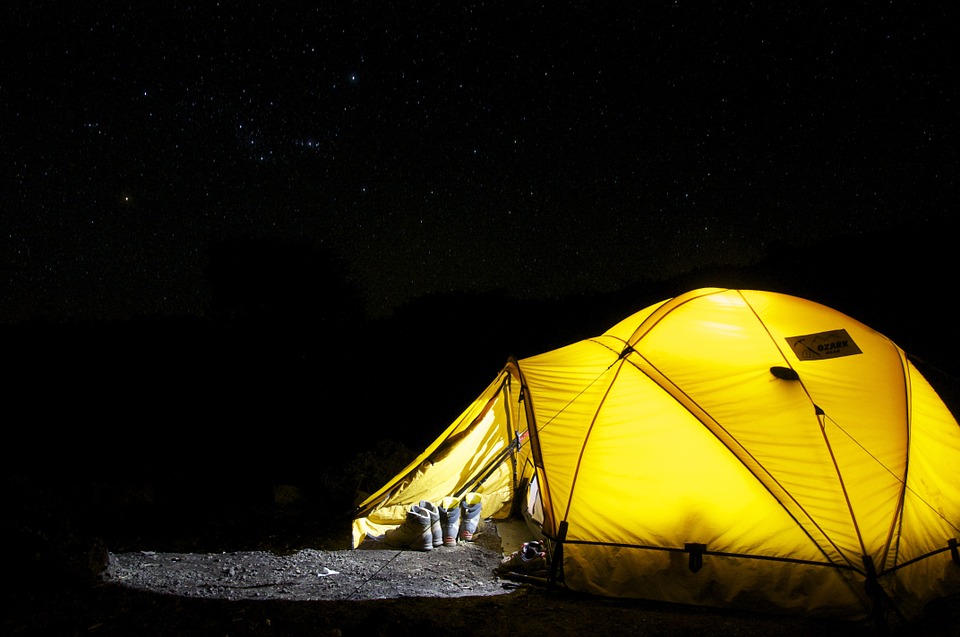
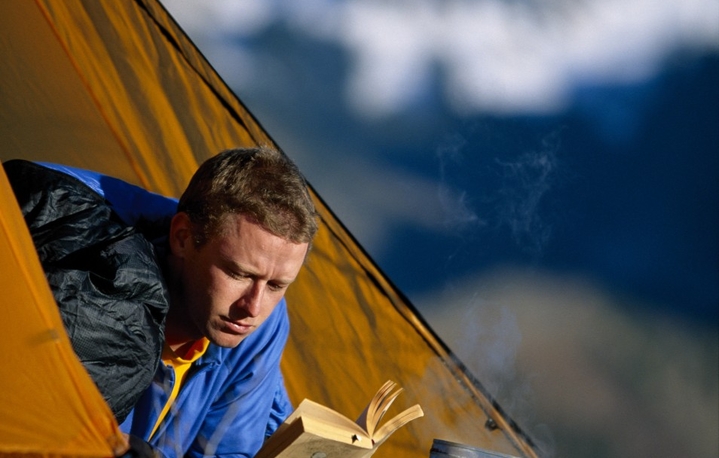
In Sleeping Bag Inside the Tent

Choosing the Right Sleeping Bag

In Sleeping Bag Inside the Tent

You remember the days when you grabbed your sleeping bag and built a fort in the living room or stayed over at a friend’s house. The bag unrolled on the floor and the indoor adventure began, but at the time, you probably never thought of your sleeping bag as a valuable piece of survival gear.

A sleeping bag is not just a blanket to roll up in, it is a shelter from the elements and it can save your life in extreme cold weather if you have the right bag. Not all bags are created equal however, and you must match the bag with your outdoor adventure.

Getting Started

Anyone that has camped in sub zero temperatures would probably agree that a mummy type sleeping bag is better designed to keep you warm. However, some may find it a bit constricting so the open faced one or one that unzips into a large blanket, if you will, may be more desirable in milder climates. In extreme cold areas, you want as much of your body covered as possible however, and this includes the head and the sides of your face so make sure your mummy type bag has a hood that encloses your head and face and the hood should be adjustable.

For extreme cold weather adventures, you would want the bag to be able to protect you at zero degrees or lower. Bags are rated at various temperatures but it is better to have below zero protection even if you do not necessarily need it each night.

There is no standard in the Untied States for sleeping bag ratings such as is the case in Europe where they have the EN 13537 standard. What this essentially means is a bag rated for 20ᵒF from one manufacturer in the United States can differ from another manufacture making the same rating claim because there are no standards.

Make sure the bag is big enough for your body. Mummy bags should have extra material at the feet for warmth and enough room so your feet are not squeezed together. Check the shoulder space to make sure you can move around or even roll over inside the bag if needed.

Type of Fill

Goose down in and of itself is by far the better insulator but once placed in a sleeping bag it does have its drawbacks over certain synthetic materials. Goose down when wet has almost no insulating qualities. While it has “loft”, which means it expands to provide air pockets that are essential to maintaining warmth throughout the night, the down is easily compacted causing cold spots unless the bag is a high enough quality to where the down is in individual pockets inside the lining. The pockets keep the down from spreading thin as you lay on it.

Down filled bags must be dried properly and not stored rolled up to prevent compacting the down. It would be necessary to have a waterproof sleeping bag cover or Bivy, which can act as a shelter if you do not have a tent to protect you from the elements. Once the down becomes wet, it must be dried before storing. Most experts would agree sleeping with wet down in cold weather is more dangerous than sleeping without the bag at all because anyone sleeping on damp material can easily succumb to hypothermia.

A synthetic material such as PrimaLoft® is a microfiber thermal insulator that provides close to the same insulating qualities as down. PrimaLoft was developed specifically for the United States Army in the 1980s. The material is comparable to goose down but it does not lose its insulating qualities when wet and is easily dried and can be stored rolled up tight. Additionally it is considerably less expensive than goose down.

The material does not compact like goose down so it reduces cold spots and can provide more cushioning against the ground. However, with any sleeping bag it is recommended that you use a sleeping mat to providing cushioning and insulation because sleeping bags simply do not provide much protection against the ground.

The bag of course must have a zipper that allows opening from inside the bag. The zipper area should be reinforced with a draft tube along the zipper so there is not a “cold zone”.
The bag should come with a water resistant if not waterproof carry bag that can be lashed to your pack to keep the bag dry during rainy hikes. The sleeping bag must be such that it can be rolled tight when not in use.

Know the climate in the area you will be hiking or camping in so you can be prepared. A bag that protects you at below zero will protect you at below zero and above but a bag rated between 32 and 50ᵒF could create a serious problem if the temperature drops below freezing.